Mediterranean Chicken Pita
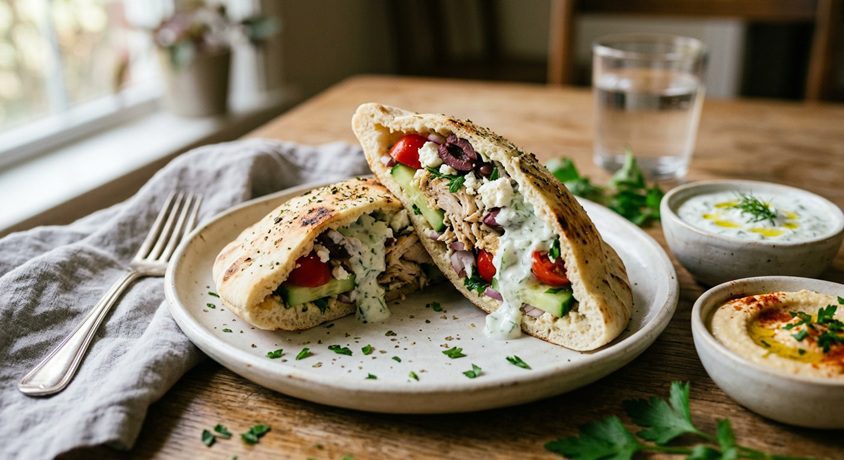
A Mediterranean chicken pita is one of the few dinners that looks like you put effort in and requires almost none. Rotisserie chicken tossed with lemon juice, olive oil, and dried oregano. Store-bought hummus and tzatziki. Cucumber, cherry tomatoes, red onion, kalamata olives, crumbled feta. All of it loaded into a pocket pita in a specific order that keeps the whole thing from falling apart in your hands. Ten minutes. Zero cooking. Actual dinner.
Every other recipe in this category requires you to cook the chicken first — marinated and grilled, sheet pan roasted, skillet seared. Some of them have you doing all three sequentially. The result is usually excellent, but it’s a 45-minute commitment that includes marinating time, oven preheating, and cleanup. This version skips all of that by starting with a rotisserie chicken from the grocery store, which is already cooked, already seasoned, and already better than anything you could produce on a sheet pan on a weeknight when you’re running on fumes.
The Build Order Is the Whole Recipe
Most pita problems are structural. The filling is fine. The ingredients are correct. But nobody explained the order, so the whole thing goes in at once, the bread soaks through in four minutes, and you’re eating a pile of ingredients that used to be a pita with a fork because it disintegrated.
The fix is hummus first. Always. Spread a generous layer of hummus on the inside walls of the pita pocket before anything else goes in. Hummus is thick, fat-rich, and adheres to the bread surface. It creates a moisture barrier between the interior of the pita and everything wet that’s going inside — the cucumber, the tomatoes, the tzatziki. That barrier is what gives you a pita that holds together through an entire meal instead of one that’s structurally compromised by the second bite.
After the hummus: chicken, then the vegetables, then feta, then tzatziki as the finishing sauce over everything. The tzatziki goes in last rather than on the side so it coats the filling from above rather than sitting in a puddle at the bottom. Every bite gets a hit of the cool, garlicky sauce rather than just the bites where you managed to get enough dip on the outside.
Why the Lemon and Oregano Step Matters
The recipe has a five-minute step where the rotisserie chicken gets tossed with lemon juice, olive oil, dried oregano, salt, and pepper before it goes into the pita. This is not optional even though the chicken is already fully cooked and seasoned. Rotisserie chicken, left as-is, tastes like rotisserie chicken — which is good, but generically so. The lemon juice brightens it. The oregano pulls it specifically toward a Mediterranean flavor profile rather than just “chicken in a pita.” The olive oil adds a little gloss and richness that keeps the shredded meat from feeling dry.
It takes five minutes and the difference is noticeable enough that the people eating this will assume you did more than pull chicken off a rotisserie bird and squeeze a lemon on it. Which is technically all you did. Nobody needs to know.
The Make-Ahead Alternative
If you don’t have a rotisserie chicken on hand, the Slow Cooker Shredded Chicken Breast recipe on this site is the exact right alternative. Set it before you leave for work, shred it when you get home, toss it with the lemon and oregano, and these pitas take five minutes from there. The slow cooker chicken actually absorbs the Mediterranean seasoning more thoroughly than rotisserie does — the shreds are looser and more porous, so the lemon and olive oil work their way through the whole batch rather than just coating the surface.
It’s also significantly cheaper than buying a whole rotisserie chicken if you’re making this for four people more than once a week — boneless skinless chicken breast from the grocery store runs considerably less per pound than a prepared rotisserie bird, and the slow cooker does all the work while you’re at the office.
Store-Bought Hummus and Tzatziki — What to Buy
Both of these are grocery store ingredients and the quality range is enormous. A bad hummus or a watery tzatziki will tank an otherwise perfect pita.
For hummus: Sabra is the most widely available and consistently solid. Hope Foods and Cedar’s are better if your store carries them. Avoid anything where the first ingredient is water — it should be chickpeas. The single-serve cups that come with pretzels are not the right product here; you want a full-size container with proper consistency.
For tzatziki: Trader Joe’s makes an excellent version. Whole Foods 365 is also reliably good. The generic grocery store versions tend to be too watery — if that’s what you have, drain it briefly through a fine mesh strainer before using, otherwise it makes the filling wet and diluted within minutes of assembly.
Pocket Pita vs Flatbread
Pocket-style pita is called for in this recipe because it contains the filling structurally — the pocket is the vessel. If your grocery store only has flatbread-style pita with no pocket, it works as a wrap: lay it flat, spread the hummus down the center, add the filling, fold in the sides, and roll like a burrito. It’s actually easier to eat that way and the flavors are identical.
Warm either version briefly in the microwave for ten seconds before using — a cold pita is stiff and cracks when you try to open the pocket or fold the wrap. Ten seconds of heat makes it pliable enough to work with and warm enough to eat.
Substitutions
Chicken: Any cooked shredded chicken works — the Slow Cooker Shredded Chicken Breast mentioned above, leftover chicken from any other recipe on this site, or even canned chicken in a pinch. The lemon-oregano toss is what makes it taste Mediterranean regardless of the source.
Feta: Goat cheese crumbled over the top works as a substitute — similar tangy, creamy quality. Fresh mozzarella torn into pieces is milder but still works with the other flavors.
Olives: Kalamata olives are the right call — they’re brine-cured and have a meaty, slightly wine-forward flavor that plays well with the feta and tzatziki. Green olives work as a substitute. If you hate olives, leave them out entirely; the pita doesn’t need them structurally.
Vegetables: This recipe is extremely forgiving on the produce front. Roasted red peppers from a jar, marinated artichoke hearts, baby spinach instead of parsley, sliced radishes for extra crunch — anything in the Mediterranean pantry direction works.
What to Serve With It
These pitas are a complete dinner on their own, especially if you’re generous with the filling. If you want something alongside: a simple Greek salad (cucumber, tomato, feta, olives, red onion, olive oil and red wine vinegar — done in three minutes), a bag of pita chips with extra hummus for dipping while you assemble, or the Mediterranean Mezze Board on this site if you’re feeding more people and want to turn the whole thing into a spread.
Storage
Assemble fresh, every time. A pita that’s been sitting assembled in the fridge overnight is a textural disappointment — the bread goes soft, the vegetables release liquid, and the tzatziki soaks through everything. The individual components all keep well separately: seasoned chicken for three days, sliced vegetables for two, hummus and tzatziki in their original containers for up to a week. When you’re ready to eat, assembly takes three minutes.
Mediterranean Chicken Pita
Ingredients
Meat & Protein
- 3 cup rotisserie chicken shredded
Produce
- 1 cucumber thinly sliced
- 0.5 red onion thinly sliced
- 1 cup cherry tomatoes halved
- 1 lemon juiced
- 2 tbsp fresh parsley roughly chopped
Dairy
- 0.5 cup feta cheese crumbled
Pantry & Canned Goods
- 4 pita bread large, pocket-style
- 0.5 cup hummus store-bought
- 0.5 cup tzatziki store-bought
- 0.25 cup kalamata olives pitted and halved
- 1 tbsp olive oil
Seasonings & Spices
- 0.5 tsp dried oregano
- 0.25 tsp black pepper
- 0.25 tsp kosher salt
Instructions
- In a medium bowl, toss the shredded rotisserie chicken with the lemon juice, olive oil, dried oregano, salt, and pepper. Let it sit for 5 minutes while you prep everything else — the lemon and oregano wake the chicken up considerably and make it taste like something instead of just leftover rotisserie bird.
- Gently open each pita pocket — if the pita won’t open easily, warm it in the microwave for 10 seconds to make it pliable. Spread a generous tablespoon of hummus inside the bottom of the pita pocket first. This is the structural layer — it coats the interior bread surface and acts as a moisture barrier that slows sogginess and anchors everything that goes in after it.
- Add the seasoned chicken as the next layer, followed by cucumber slices, cherry tomatoes, red onion, and kalamata olives. Crumble feta over the top of the filling. Spoon tzatziki directly over everything inside the pita — it acts as the finishing sauce rather than a dip on the side. Scatter fresh parsley over the top.
- Serve immediately with extra tzatziki and lemon wedges on the side. If you’re eating these on the go or packing them to go, wrap the bottom half of each pita in foil — it holds the structure together and catches anything that escapes.