Chicken Fajita Rice Bowl
A chicken fajita rice bowl is exactly what it sounds like — fajita-seasoned chicken, peppers, and onions over rice — and also completely different from what most recipes make it. The standard version cooks everything separately and assembles it in a bowl. This version cooks the rice directly in the skillet, in the fajita-spiced broth left behind after the chicken and vegetables have done their thing. The rice absorbs the chili powder, the cumin, the smoked paprika, the charred pepper juices, the chicken fat. It comes out tasting like a fajita, not like plain rice sitting next to a fajita. That’s the version worth making.
One pan. Thirty-five minutes. The toppings — avocado, sour cream, shredded cheese, lime — go on at the end and take another two minutes. This is a complete dinner that doesn’t require a second pot of anything.
Why the Rice Goes In the Pan
Every other one-pan chicken fajita rice recipe either uses instant rice, which has a texture problem, or adds the rice at the same time as the chicken, which means it sits in the pan for too long and goes mushy at the bottom. This approach cooks the chicken and vegetables first, removes the chicken, then adds the dry rice to toast briefly in the seasoned fat before the broth goes in. The rice absorbs flavored liquid instead of plain water, and it picks up the fond from the bottom of the pan as the broth deglazes everything.
The liquid ratio matters: 1 cup of long grain white rice to 1¾ cups of chicken broth. That’s tighter than a standard rice-to-water ratio because the peppers and onions release liquid as the lid goes on. Trust the ratio and don’t lift the lid.
The Lid Rule
Once the broth goes in and the lid goes on, leave it alone for 15 to 18 minutes. Every time you lift the lid, steam escapes, the temperature drops, and the rice takes longer to finish. This is the most common reason one-pan rice dishes end up undercooked — people can’t resist checking. Set a timer, leave the kitchen, come back when it goes off.
The 5-minute rest off heat with the lid still on is just as important. That rest allows the steam inside to redistribute and finishes cooking the very bottom layer of rice. Skip it and the bottom will be slightly overcooked while the top is still firm. Rest it, then open, then fold in the chicken.
Char the Peppers
The bell peppers and onion shouldn’t just soften — they should have some color on them. That char is where the fajita flavor lives. High heat, don’t stir too often, let them sit against the hot pan for a minute before moving. A charred edge on a pepper slice tastes completely different from a softened one, and that difference makes itself known in the finished bowl.
Toppings Make the Bowl
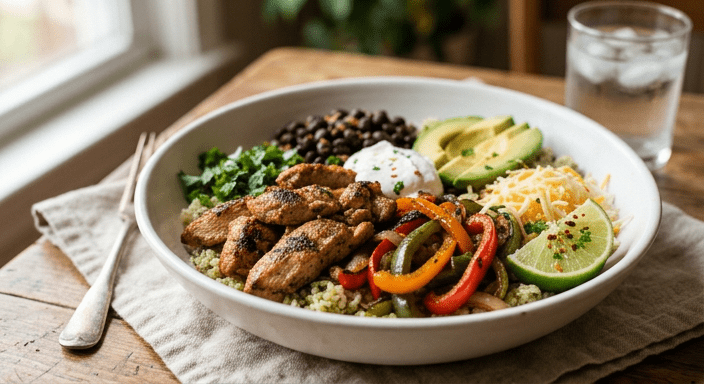
The base is complete without anything on top. The toppings are what make it a bowl. Sliced avocado, a spoonful of sour cream, shredded Mexican cheese, fresh cilantro, and a lime wedge for squeezing — that’s the full version. You can add salsa, pickled jalapeños, or hot sauce and all of those work. The lime is not optional. The acid at the end brightens everything and cuts through the richness of the cheese and sour cream.
For other Tex-Mex dinners that run on a similar format, the Skillet Ground Beef Tacos and Slow Cooker Chicken Tortilla Soup are natural rotation partners.
Leftovers and Storage
Keeps for 4 days in the fridge. The rice absorbs more liquid as it sits — add a splash of chicken broth when reheating and stir over low heat or microwave in 90-second intervals. Add fresh toppings after reheating rather than before storing. This is a solid meal prep recipe — the base holds up well and the toppings can be added fresh each day.
Chicken Fajita Rice Bowl
Ingredients
Meat & Protein
- 1.5 lbs boneless skinless chicken thighs cut into 1-inch pieces
Produce
- 1 red bell pepper thinly sliced
- 1 yellow bell pepper thinly sliced
- 1 yellow onion thinly sliced
- 4 garlic cloves minced
- 1 lime cut into wedges, for serving
- 3 tbsp fresh cilantro roughly chopped, for garnish
- 1 avocado sliced, for serving
Dairy
- ½ cup shredded Mexican cheese blend for serving
- ¼ cup sour cream for serving
Pantry & Canned Goods
- 1 cup long grain white rice uncooked
- 1 can black beans drained and rinsed
- 1.75 cups chicken broth low sodium
- 2 tbsp olive oil divided
Seasonings & Spices
- 1.5 tsp chili powder
- 1 tsp ground cumin
- 1 tsp smoked paprika
- 1 tsp garlic powder
- ½ tsp onion powder
- 1 tsp kosher salt divided
- ½ tsp black pepper
- ¼ tsp crushed red pepper flakes optional
Instructions
- In a small bowl, combine the chili powder, cumin, smoked paprika, garlic powder, onion powder, ½ tsp kosher salt, and black pepper. This is the fajita seasoning blend. Toss the chicken pieces with half the seasoning blend and set aside.
- Heat 1 tbsp olive oil in a large deep-sided skillet over medium-high heat. Add the chicken in a single layer and cook for 4 to 5 minutes, turning once, until golden and cooked through. Remove to a plate — do not wipe the pan.
- Add the remaining 1 tbsp olive oil to the same skillet over medium-high heat. Add the sliced onion and bell peppers. Cook for 3 to 4 minutes, stirring occasionally, until softened and beginning to char at the edges. Add the garlic and cook for 30 seconds. Sprinkle the remaining fajita seasoning over the vegetables and stir to coat.
- Add the uncooked rice to the pan and stir to coat in the seasoned oil and vegetable juices — toast for 1 minute. Pour in the chicken broth and add the remaining ½ tsp kosher salt and red pepper flakes if using. Scrape up any browned bits from the bottom of the pan. Bring to a boil.
- Add the drained black beans and stir to distribute. Reduce heat to low, cover tightly, and cook for 15 to 18 minutes until the rice has absorbed the liquid and is fully cooked through. Do not lift the lid during cooking.
- Remove from heat and let rest covered for 5 minutes. Return the cooked chicken to the pan and gently fold it into the rice. Taste and adjust salt.
- Serve directly from the skillet topped with shredded Mexican cheese, fresh cilantro, sliced avocado, sour cream, and lime wedges for squeezing over the top.