The Best Tuna Salad Recipe (Not the Sad, Watery Kind)
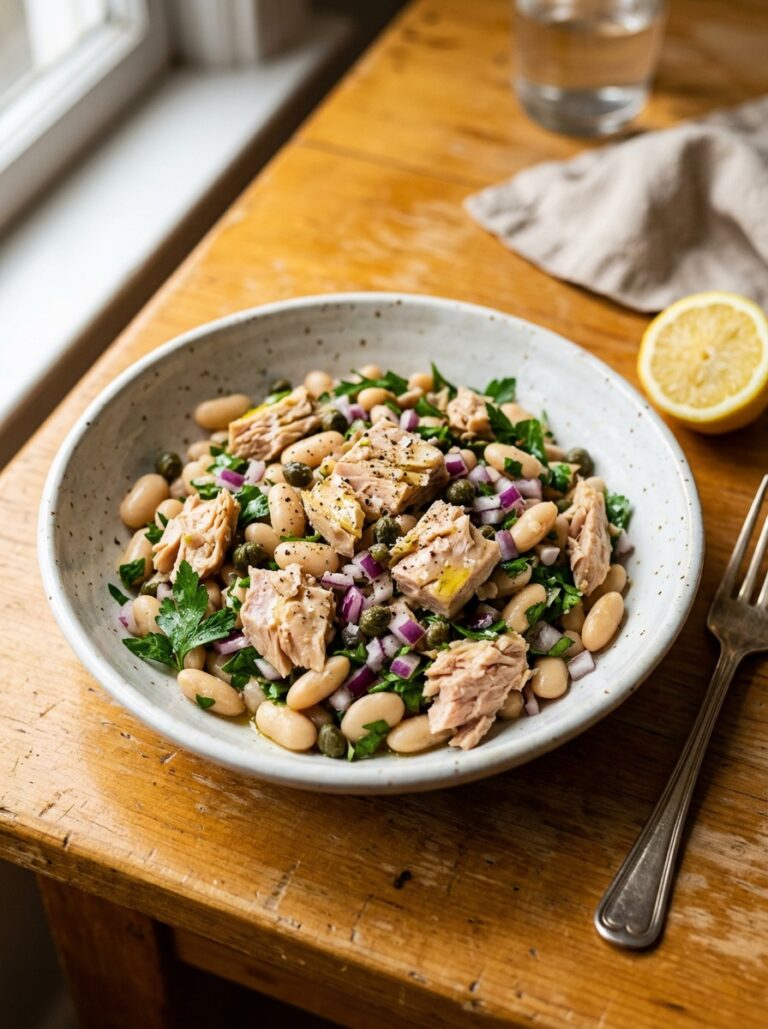
Bad tuna salad is one of the most common things people eat and nobody talks about it. You open a can, dump in too much mayo, maybe add some celery if you’re feeling ambitious, and end up with something that tastes like wet protein and regret. It goes on bread and you eat it because it’s there. That’s not this. This best tuna salad recipe has Dijon, fresh dill, lemon, good mayo, and the right ratio of celery and red onion to give you crunch and bite without overwhelming the fish. It takes ten minutes and it tastes like something from an actual deli counter rather than something you made because you didn’t want to go to the store.
The difference between tuna salad that’s good and tuna salad that you make twice a week is almost entirely about three things. The tuna, the mayo, and the acid.
Start with the right tuna
Two cans, five ounces each, packed in water. Drain them well — press the lid into the can and tip it over the sink, hold it there for thirty seconds. Water left in the can dilutes the mayo and makes the whole thing loose and bland. Albacore tends to be firmer and flakier; chunk light is softer and slightly stronger in flavor. Either works. What doesn’t work is tuna packed in oil if you’re using good mayo — the fat content tips into greasy territory fast.
The mayo debate: settled
Hellmann’s or Duke’s. That’s it. Miracle Whip is not mayo, it’s a different product with a different flavor profile, and it will make this taste like a completely different recipe. Generic store-brand mayo is fine in a pinch but both Hellmann’s and Duke’s have a cleaner, richer flavor that holds up against the Dijon and lemon without disappearing. Three tablespoons is the right amount for two cans of tuna — enough to bind everything without drowning it. If you find yourself adding a fourth, stop and ask if the tuna was drained well enough.
What actually makes this recipe taste better than the standard version
The Dijon and the dill are doing the work that relish or pickle does in a classic deli tuna salad — they add complexity and a slight sharpness that keeps the whole thing from tasting flat. Fresh dill is noticeably better than dried here if you can get it; a tablespoon of fresh versus a teaspoon of dried. The lemon is not optional — half a lemon, squeezed directly into the bowl, brightens everything and cuts through the richness of the mayo in a way that makes the whole salad taste lighter than it is.
The celery and red onion add crunch and bite. Dice both fine — you want texture in every bite, not a large chunk of raw onion that announces itself halfway through a sandwich. Fine dice on the red onion especially.
How do you want to eat it
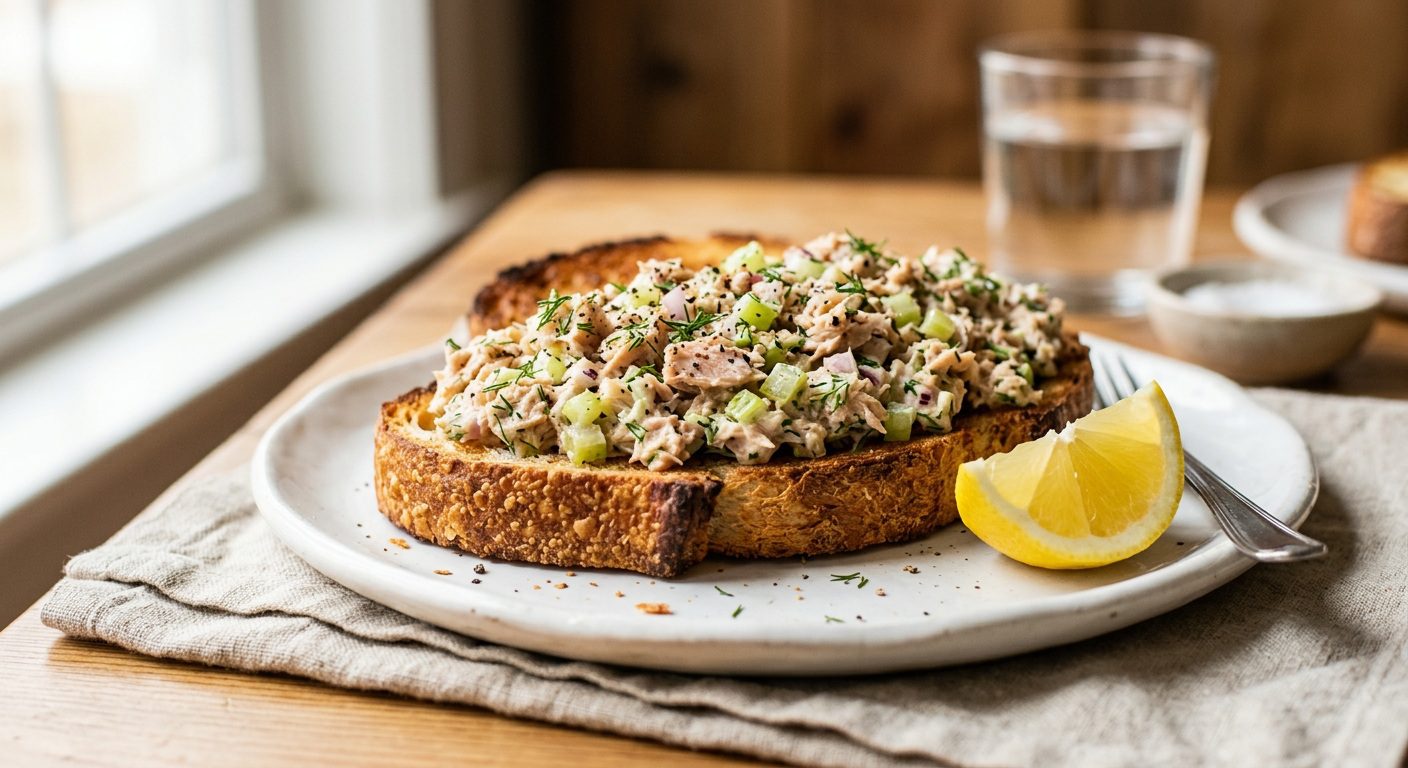
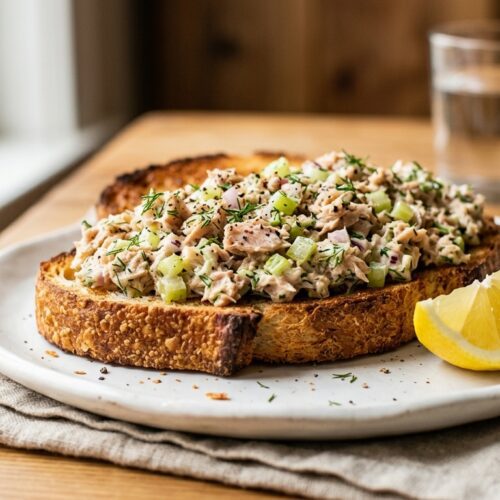
On toast is the default and it works. A thick slice of sourdough, lightly toasted, holds up to the salad without getting immediately soggy. Crackers if you want something lighter and faster. Stuffed into half an avocado if you’re going low-carb. Straight out of the bowl with a spoon if it’s just you and nobody’s watching, which is also a valid dinner.
Over a bed of greens it works as a legitimate salad — no cooking required, actual protein, done in ten minutes. This is the move for a lunch that needs to travel well or a dinner where you want something cold and fast.
Can you swap anything
Greek yogurt for half the mayo if you want it lighter — it changes the texture slightly but the flavor holds. Capers instead of red onion if you want more brine. A pinch of smoked paprika if you want depth without heat. What you shouldn’t swap: the Dijon and the dill together are the reason this tastes like the best version of tuna salad, so if you’re going to skip one of them, know that the recipe gets closer to standard territory.
Storage
Three to four days in an airtight container in the fridge. It actually improves after a few hours as the flavors settle — if you can make it in the morning for dinner, do it. Don’t leave it at room temperature for more than two hours. Don’t freeze it.
What delivery charges for this
A deli tuna salad sandwich or tuna salad plate from a delivery app runs $12–14 before fees. With delivery and tip you’re at $18–22. Two cans of tuna, the mayo, and the fresh ingredients cost about $5–7 total and make enough for four solid servings — lunch and dinner covered, change left over.
The Best Tuna Salad
Ingredients
Meat & Protein
- 2 cans tuna in water (5 oz each) well drained
Produce
- 2 stalks celery finely diced
- 2 tbsp red onion finely diced
- .5 lemon
Pantry & Canned Goods
- 3 tbsp good quality mayonnaise Hellmann’s or Duke’s recommended
- 1 tbsp Dijon mustard
Seasonings & Spices
- 1 tbsp fresh dill, chopped or 1 tsp dried
- salt and black pepper to taste
Instructions
- Drain the tuna thoroughly — press it against the can lid to squeeze out as much liquid as possible. Watery tuna ruins the texture.
- Add the tuna to a bowl and break it up with a fork into small flakes.
- Add the mayonnaise, Dijon mustard, celery, red onion, lemon juice, and dill. Mix well.
- Taste and adjust — more lemon if it needs brightness, more mayo if it feels dry, salt and pepper to finish.
- Serve on toasted sourdough, with crackers, in lettuce cups, or straight from the bowl. All valid options.