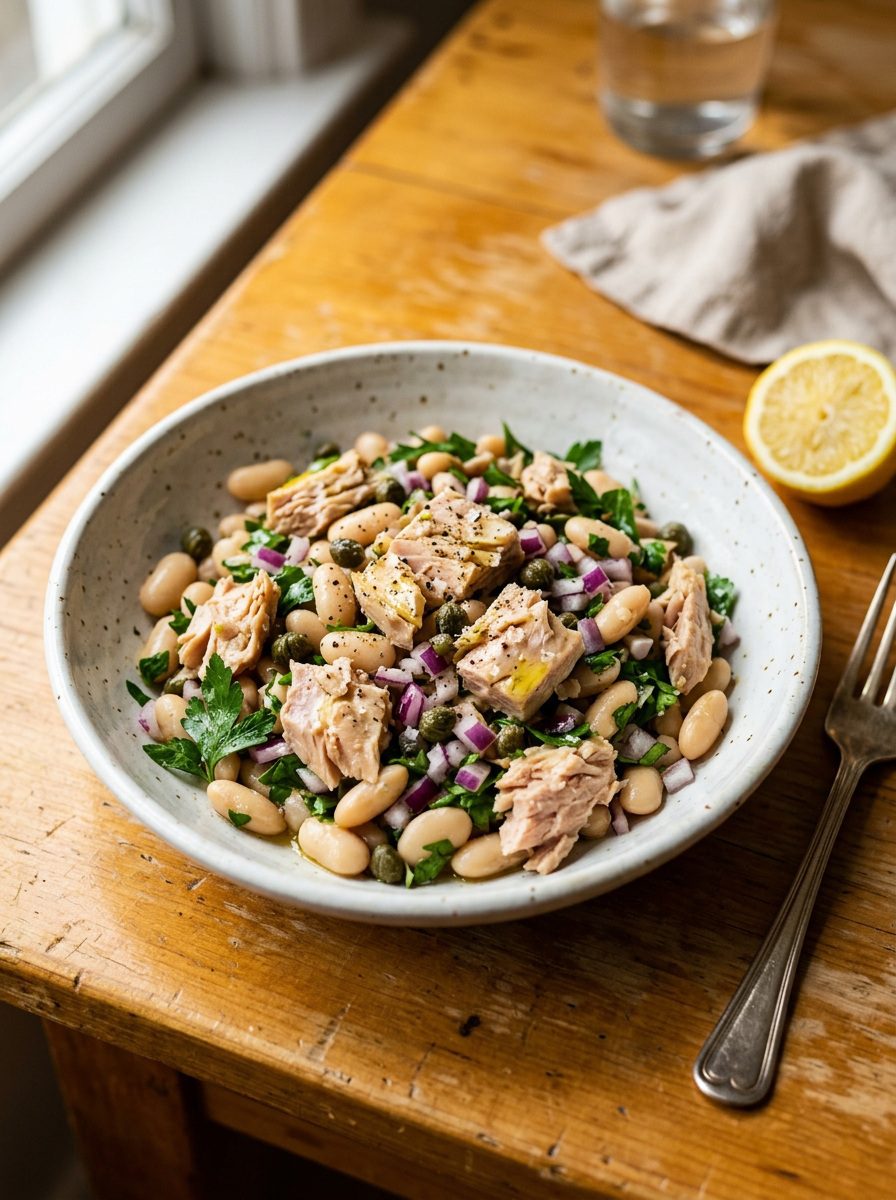
White Bean and Tuna Salad
White bean and tuna salad is Italian pantry cooking at its most practical — and it’s one of the most underrated no-cook dinners you can make on a weeknight when the fridge is mostly empty and you have absolutely no desire to turn on the stove. Two cans, a lemon, some olive oil, and ten minutes. The result is something that tastes like it came from a good deli counter and has enough protein and fiber to actually keep you full, which is more than you can say for most no-cook dinners.
This is not your standard tuna salad. There’s no mayo, no celery, no pickle relish. It’s closer to what you’d eat in a trattoria in Rome if you ordered the antipasto and they brought out a bowl of something bright and lemony with beans and good canned fish. It’s filling, it’s genuinely flavorful, and it takes less time to make than deciding what to order on DoorDash.
The tuna actually matters here
Most tuna salad recipes are designed to mask the flavor of mediocre canned tuna with enough mayo and seasoning that it doesn’t really matter what brand you buy. This recipe is built differently. The tuna is front and center, dressed simply, and the quality comes through directly.
Tuna packed in olive oil is what you want — Genova, Wild Planet, or any Italian-style canned tuna packed in good oil. It stays in larger flakes, has a richer flavor, and doesn’t need much else done to it. The oil it’s packed in also contributes to the dressing, so you’re not wasting it when you drain the can — drain loosely, not bone dry. If you only have water-packed tuna, that works too, just drain it completely and add an extra tablespoon of olive oil to the dressing to compensate for what you’re missing.
Cannellini beans are doing more than filling space
Cannellini beans — the large Italian white beans — are creamy, mild, and substantial in a way that turns what could be a light salad into an actual dinner. They absorb the lemon dressing as they sit, which is why this salad improves significantly after twenty minutes in the bowl and is even better the next day. They also add a texture contrast to the flaky tuna that makes every bite more interesting than a tuna salad without them.
Great Northern beans work as a substitute. Chickpeas are a reasonable swap if that’s what’s in the pantry, though the texture is different — chunkier, less creamy. Navy beans work but are smaller and get lost a bit against the tuna chunks.
The dressing is doing heavy lifting with very few ingredients
Lemon juice, olive oil, Dijon mustard. The Dijon is the secret — it emulsifies the dressing so it actually coats the beans and tuna instead of pooling at the bottom of the bowl, and it adds a sharpness that bridges the richness of the tuna and the creaminess of the beans. One teaspoon, whisked in with the lemon and oil before anything else goes in the bowl. Don’t skip it.
Fresh lemon juice, not bottled. The difference in a dressing this simple is significant.
The capers
Capers are optional in many recipes and non-negotiable in this one. They add a briny, slightly acidic punch that the salad needs — without them, the whole thing can veer toward heavy and flat. They’re already salty, so drain them and taste the salad before adding any additional salt after they go in.
If you genuinely hate capers, kalamata olives sliced thin are the closest substitute in terms of what they’re contributing flavor-wise. Chopped cornichons work in a pinch.
How to serve it
Three good options. Over a bed of arugula for a proper salad — the pepper of the arugula works the same way here as it does with steak, cutting through the richness of the tuna and olive oil. Scooped onto thick slices of toasted sourdough for something closer to a tartine. Or straight out of the bowl with a fork, which is completely valid and what most people do anyway.
If you have leftovers, store the salad without the parsley and add fresh parsley just before serving the next day. It keeps for up to three days in the fridge and tastes better on day two.
Substitutions
Fresh parsley can be swapped for fresh basil — more Italian, slightly sweeter. Sun-dried tomatoes in place of capers if you want sweetness instead of brine. A handful of halved cherry tomatoes added in at the end adds freshness and color. For a heartier version, stir in a handful of baby arugula directly into the salad instead of serving it on top.
The math
A comparable deli tuna salad or protein bowl from a fast-casual spot runs $12 to $15 for one serving. This recipe makes two generous servings for under $8 total in ingredients, and the leftovers are better than the original.
White Bean and Tuna Salad
Ingredients
Meat & Protein
- 2 cans tuna in olive oil 5 oz each, drained — yellowfin or albacore, olive oil pack preferred over water pack
Produce
- 0.25 red onion very finely diced
- 1 lemon juiced
- 0.25 cup fresh parsley roughly chopped
Pantry & Canned Goods
- 1 can cannellini beans 15 oz, drained and rinsed
- 2 tbsp capers drained
- 3 tbsp olive oil good quality extra virgin
- 1 tsp Dijon mustard
Seasonings & Spices
- 0.25 tsp kosher salt plus more to taste
- 0.25 tsp black pepper freshly cracked
Instructions
- Make the dressing: whisk together the lemon juice, olive oil, and Dijon mustard in a large bowl. Season with salt and black pepper.
- Add the drained cannellini beans, drained tuna, red onion, capers, and fresh parsley to the bowl. Toss gently to combine — you want the tuna to stay in larger flakes, not shredded. Taste and adjust salt, lemon, or pepper as needed.
- Serve as is, over arugula, or scooped onto crusty bread. Finish with an extra drizzle of olive oil if desired.