Korean BBQ Quesadilla
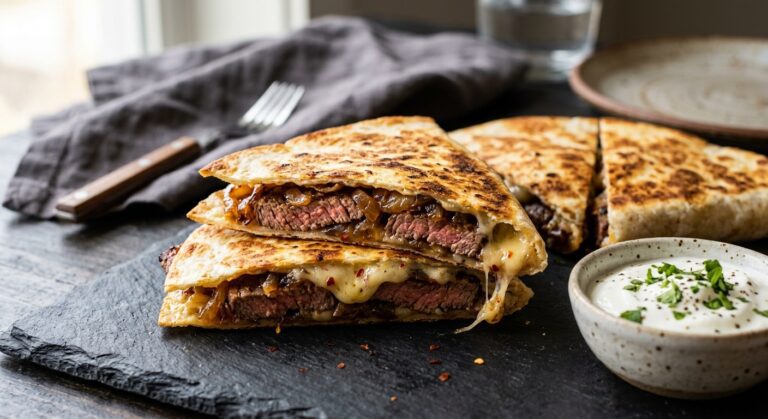
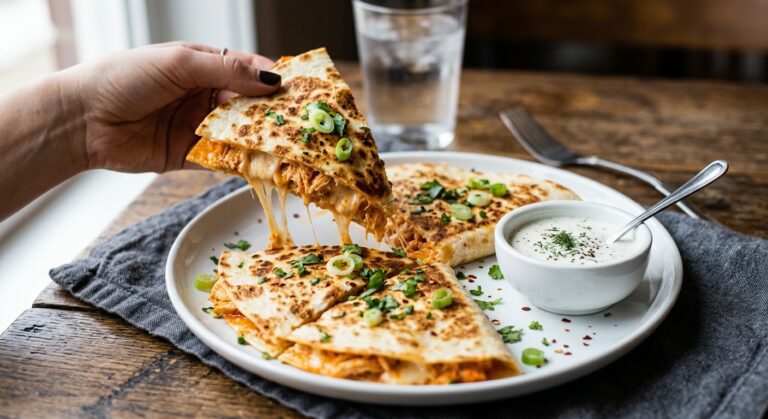
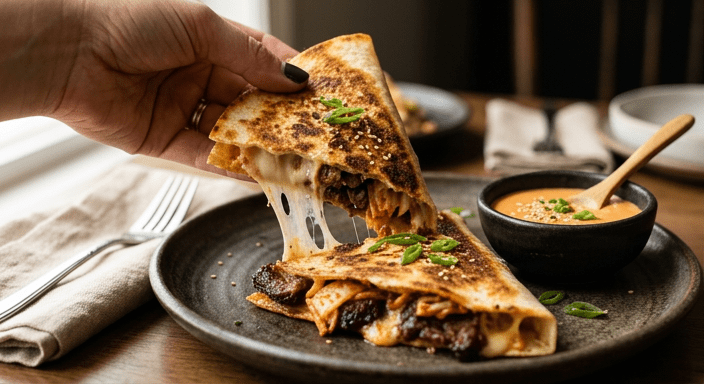
A Korean BBQ quesadilla is the kind of recipe that sounds like a food truck experiment and turns out to be one of the better things to come out of your kitchen this year. Thinly sliced beef marinated in Korean BBQ sauce, seared at high heat until the edges caramelize and char, folded into a buttery tortilla with shredded mozzarella, kimchi, and green onion. Served with a two-ingredient gochujang dipping sauce that makes the whole combination make sense in a way that regular salsa never could. Twenty-five minutes. One pan. Genuinely fun to eat.
The Korean-Mexican fusion thing isn’t new — Korean BBQ tacos have been a food truck staple for over a decade. What’s new is doing it as a quesadilla, which is structurally better suited to the combination. The flat, pressed format keeps the filling contained, the butter-toasted tortilla picks up the sweetness from the Korean BBQ sauce, and the mozzarella cheese pull happens in a way that the taco format simply can’t deliver. This is the version that makes more sense.
The Beef and the Heat
The single most important technique in this recipe is the sear, and the single most important requirement for the sear is high heat. Korean BBQ sauce has a significant amount of sugar in it — soy, sesame, garlic, and various sweeteners depending on the brand — that caramelizes at high temperature and creates the slightly sticky, charred coating that makes Korean BBQ taste like Korean BBQ. At medium heat, that same sauce just gets warm and stays wet. High heat, screaming pan, sear without touching for sixty to ninety seconds. That’s the difference between Korean BBQ beef and beef with Korean BBQ sauce on it. They are not the same thing.
Work in batches if your pan isn’t large enough to lay all the beef flat in a single layer. Crowded beef steams instead of sears — the moisture can’t escape fast enough. Better to do two batches and get the char than one crowded batch and lose it.
Why Kimchi Goes in Dry
Kimchi is fermented cabbage packed in brine. It’s tangy, funky, slightly spicy, and one of the best things you can put in a quesadilla. It is also extremely wet. Wet kimchi inside a hot tortilla releases that liquid as steam, which softens the tortilla from the inside before it has time to crisp properly.
The fix is thirty seconds: grab the chopped kimchi by the handful, squeeze over the sink, and press it between a paper towel before it goes in. Dry kimchi crisps with the quesadilla instead of working against it. The flavor is identical — you’re removing water, not flavor.
The Gochujang Dipping Sauce
Three tablespoons of mayonnaise and one tablespoon of gochujang, stirred together. That’s it. Gochujang is a fermented Korean chili paste — available in most grocery stores now in the international aisle — that adds smokiness, moderate heat, and a slightly sweet, funky depth that regular hot sauce doesn’t have. Mixed into mayo it becomes something creamy and complex that bridges the Korean BBQ beef and the cheese in a way that salsa or sour cream simply doesn’t.
If you can’t find gochujang, sriracha mixed into mayo (same ratio) works as a substitute. It’s hotter and less complex but still good. The fermented quality of the gochujang is what makes the original version worth seeking out.
Why Mozzarella and Not a Mexican Blend
Mozzarella is mild. The Korean BBQ beef is not. The cheese in this quesadilla is doing the binding and the cheese pull — it’s not supposed to be a flavor player. A Mexican cheese blend or sharp cheddar would compete with the soy-sesame-garlic profile of the beef and muddy the flavor. Mozzarella melts smoothly and stays out of the way so every bite tastes like Korean BBQ first and cheese second.
Freshly shredded from a block is the standard call — the pre-shredded bag version has anti-caking agents that slow the melt and produce a slightly grainy texture. Two minutes with a box grater.
Shortcut: Pre-Sliced Bulgogi Beef
If you have access to an Asian grocery store, look for pre-sliced beef bulgogi in the refrigerated meat section. It’s already cut paper-thin and often pre-marinated. Skip the slicing step entirely, toss it in the Korean BBQ sauce for five minutes, and sear. Cuts the prep time by half.
If you’re using a regular supermarket, the trick for thin beef slicing is partial freezing — thirty minutes in the freezer firms the meat enough to slice significantly thinner than room temperature beef. Thin is the goal; the sear is fast and thin beef cooks through in ninety seconds.
Substitutions
Beef: Thinly sliced chicken thigh works well with the Korean BBQ marinade — slightly less traditional but the caramelization is similar. Ground beef seasoned with Korean BBQ sauce is a faster option that doesn’t require thin slicing.
Kimchi: If kimchi is genuinely unavailable, pickled red cabbage adds a similar acidity and crunch without the fermented funk. The quesadilla will taste different but still work.
Gochujang: Sriracha mixed into mayo at the same ratio is the substitute. Sambal oelek adds more texture. Neither has the fermented complexity of gochujang but both produce a good dipping sauce.
What to Serve With It
The gochujang mayo is the dipping situation. Beyond that, a simple cucumber salad — thinly sliced cucumber, rice vinegar, a pinch of sugar and salt — is the clean, cooling accompaniment that balances the richness of the cheese and the heat of the gochujang. A bowl of steamed rice on the side if you want to stretch it further. Nothing elaborate — the quesadilla is the event.
Storage
Eat these fresh. The kimchi releases liquid over time and the tortilla softens quickly once assembled. Leftover Korean BBQ beef keeps refrigerated for three days and reheats well in a hot pan — make fresh quesadillas as needed rather than storing assembled ones.
Korean BBQ Quesadilla
Ingredients
Meat & Protein
- 1 lb sirloin steak sliced paper thin against the grain — partially freeze for 20 minutes for easier slicing, or use pre-sliced bulgogi beef from an Asian grocery
Produce
- 4 green onion thinly sliced
- 0.5 cup kimchi roughly chopped, excess liquid squeezed out
- 3 garlic cloves minced
- 1 tsp fresh ginger grated
Dairy
- 2 cup shredded mozzarella cheese
- 2 tbsp unsalted butter for toasting tortillas
Pantry & Canned Goods
- 4 flour tortillas large, burrito size
- 0.33 cup Korean BBQ sauce store-bought — Bibigo or CJ brand recommended
- 1 tbsp soy sauce low sodium
- 1 tbsp sesame oil
- 1 tbsp olive oil for searing
- 3 tbsp mayonnaise Hellmann’s or Duke’s recommended — for dipping sauce
- 1 tbsp gochujang Korean chili paste — for dipping sauce
Seasonings & Spices
- 1 tsp sesame seeds for garnish
- 0.25 tsp black pepper
Instructions
- Make the gochujang dipping sauce first. In a small bowl, whisk together the mayonnaise and gochujang until smooth. Taste — it should be creamy, spicy, and slightly sweet. Refrigerate until ready to serve.
- In a medium bowl, combine the thinly sliced beef with the Korean BBQ sauce, soy sauce, sesame oil, minced garlic, grated ginger, and black pepper. Toss to coat every piece evenly. The beef can go straight from here into the pan — no marinating time required, though 10 minutes if you have it makes a difference.
- Heat the olive oil in a large skillet over high heat until shimmering. Add the beef in a single layer — work in batches if needed. Sear without touching for 60 to 90 seconds until the edges caramelize and the Korean BBQ sauce starts to char slightly at the contact points. Toss and cook another 30 to 60 seconds until cooked through. The sauce should be sticky and slightly caramelized, not wet. Transfer to a plate.
- Squeeze excess liquid from the chopped kimchi using a paper towel — wet kimchi makes the tortilla soggy. Set aside.
- Wipe the skillet clean and return to medium heat. Add half a tablespoon of butter. Once melted and foamy, lay one tortilla in the pan. Sprinkle a layer of mozzarella over one half. Add a quarter of the Korean beef, a spoonful of kimchi, and a scatter of sliced green onion. Top with another layer of mozzarella. Fold the empty half over and press down firmly with a spatula.
- Cook for 2 to 3 minutes until the bottom is deeply golden. Flip carefully and cook another 2 minutes until the second side is crispy and the cheese is fully melted. Transfer to a cutting board and repeat with remaining quesadillas.
- Rest 1 minute before cutting. Slice into wedges, garnish with sesame seeds and extra sliced green onion, and serve with the gochujang dipping sauce alongside.