Slow Cooker BBQ Mac and Cheese
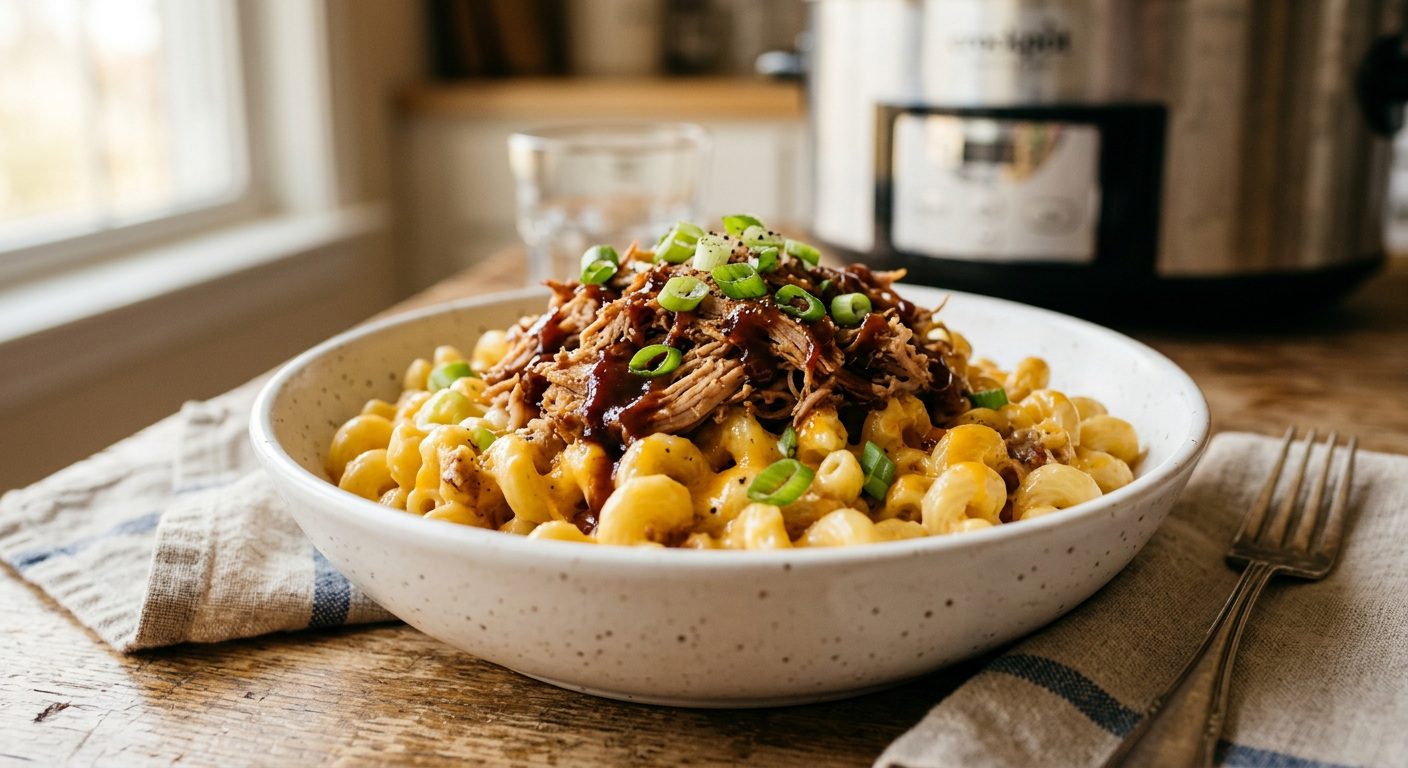
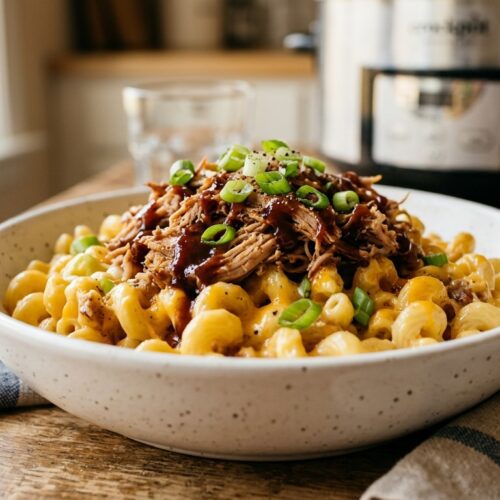
BBQ mac and cheese is the answer to the question nobody thought to ask: what if pulled pork and mac and cheese weren’t two separate dishes that you serve alongside each other, but one actual dinner? The answer, it turns out, is one of the better meals you can put on a weeknight table — a rich, smoky cheese sauce coating short pasta, topped with BBQ-glazed pulled pork, a drizzle of extra sauce, and sliced green onion. It looks like it took effort. It did not.
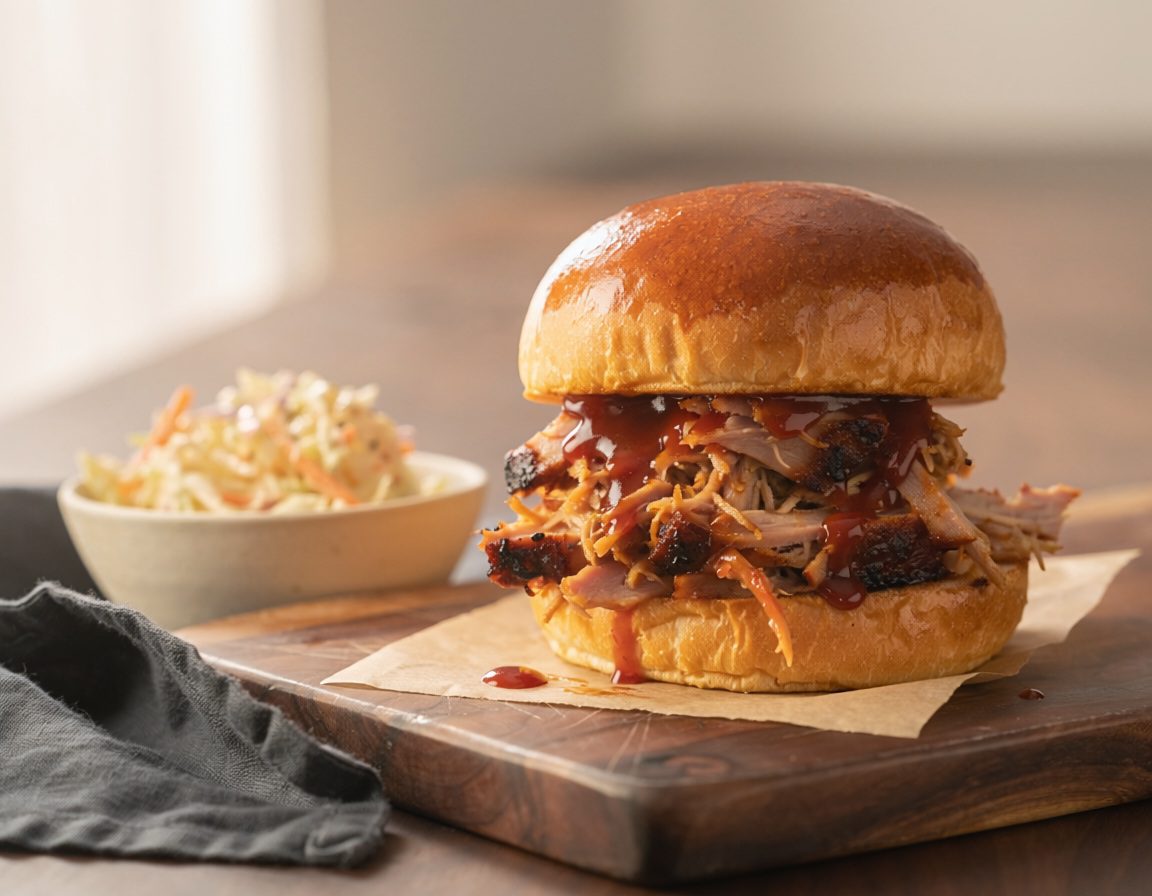
The slow cooker does the heavy lifting — this recipe assumes you already have pulled pork from the Slow Cooker Pulled Pork or Slow Cooker Pork Carnitas recipes on this site, or that you picked up store-bought BBQ pulled pork at the grocery store on the way home. Either way, the pork is not the project tonight. The cheese sauce is a 15-minute stovetop operation that produces something dramatically better than anything that comes from a box, and the whole thing comes together faster than delivery would arrive.
Why a Bowl Beats a Casserole
Almost every pulled pork mac and cheese recipe on the internet is a baked casserole — pasta mixed with cheese sauce and pulled pork in a 9×13 dish, topped with breadcrumbs, baked at 350°F for 30 minutes. That’s a commitment. It’s also a second oven, a baking dish to wash, and an extra half hour you probably don’t have.
This version skips the casserole entirely. The cheese sauce goes on the stovetop, the pasta gets folded in, and the pork goes on top at the end. Serve it in a bowl. It takes 30 minutes, has two pans to wash, and produces a creamier result than baking ever could — because baking mac and cheese is always fighting against the oven drying out the sauce. On the stovetop, you control the consistency until the second it hits the bowl.
The Cheese Sauce Is the Whole Recipe
The pork is already done. The pasta takes 10 minutes. The cheese sauce is where all the decisions get made, and there are three that matter.
Use a roux. Butter plus flour, cooked for one minute, then milk and cream whisked in slowly. The roux is what prevents the sauce from breaking into a greasy, grainy mess when the cheese goes in. Skip it and add cheese directly to warm milk and you’ll end up with a sauce that looks fine at first and separates within five minutes. One minute of whisking is not a lot to ask for a sauce that stays smooth.
Shred the cheese yourself. This is not optional. Pre-shredded cheese contains anti-caking agents — usually cellulose or potato starch — that coat every strand and actively prevent it from melting smoothly into a cream sauce. You’ll get a grainy, slightly lumpy texture no matter how carefully you add it. Buy a block of sharp cheddar and shred it yourself. It takes two minutes with a box grater and makes an enormous difference.
Add the cheese on low heat, a handful at a time. High heat causes the protein in cheese to seize and the fat to separate — which is what turns a cream sauce into a broken, greasy mess. Turn the heat to low, add a handful, stir until it’s fully melted, add the next handful. It takes four or five additions and maybe three extra minutes. That’s the whole technique.
The BBQ Sauce Does Two Jobs
The BBQ sauce goes into the pork to warm it through — Sweet Baby Ray’s or Stubb’s, whatever you keep in the house — and then gets drizzled again on top at serving. The first application glazes the pork and integrates the smokiness into the filling. The second application at serving is visual and flavor — the drizzle on top is what makes the dish look composed rather than just a bowl of mac and cheese with pork dumped on it.
Smoked paprika goes into the cheese sauce itself, not just as a garnish. It’s the bridge between the smoke of the BBQ sauce and the richness of the cheddar. Without it, the two flavors sit next to each other. With it, they feel like the same dish.
Substitutions
Cheese: Sharp cheddar is the anchor. Gruyere adds depth and a slightly nutty quality that plays well with the smokiness. If you don’t have gruyere, use all cheddar — the sauce will be richer and more straightforward, which is not a bad thing. Smoked gouda is an excellent addition if you have it; it reinforces the BBQ flavor directly in the sauce.
Pasta: Cavatappi is the best choice — it’s tubular with ridges that catch the sauce on both the inside and outside. Elbow macaroni is the classic and it works perfectly. Any short, sturdy pasta shape holds up to the weight of the pork on top.
Pork: Store-bought BBQ pulled pork from the refrigerated section at the grocery store is a completely legitimate shortcut here. Pulled chicken works too. Leftover brisket, if you have it, is extraordinary.
What to Serve With It
Honestly, nothing. This is a full dinner in a bowl — protein, starch, fat, sauce. If you want a vegetable alongside, a simple coleslaw from a bag kit with a little apple cider vinegar and salt gives you acidity and crunch that cuts through the richness of the mac and cheese. That’s the pairing. Don’t overthink it.
Leftovers
Refrigerate leftovers for up to three days. Reheat in a saucepan over low heat with a splash of whole milk — the sauce will have tightened overnight and the milk brings it back to the right consistency. Stir until smooth before serving. The microwave works in a pinch; if the sauce looks broken after microwaving, a quick stir usually brings it back together.
Slow Cooker BBQ Mac and Cheese
Ingredients
Meat & Protein
- 2 cup pulled pork from Slow Cooker Pulled Pork or Slow Cooker Pork Carnitas, warmed — or store-bought BBQ pulled pork
Dairy
- 2 cup sharp cheddar cheese freshly shredded
- 1 cup gruyere cheese shredded — or substitute more sharp cheddar
- 2 cup whole milk
- 1 cup heavy cream
- 4 tbsp unsalted butter divided — 2 tbsp for roux, 2 tbsp for pasta
Pantry & Canned Goods
- 12 oz cavatappi pasta or elbow macaroni
- 2 tbsp all-purpose flour
- 0.5 cup BBQ sauce your favorite — Sweet Baby Ray’s or Stubb’s recommended, plus more for drizzling
Produce
- 3 green onion thinly sliced, for serving
Seasonings & Spices
- 0.5 tsp kosher salt plus more for pasta water
- 0.5 tsp black pepper
- 0.5 tsp smoked paprika
- 0.5 tsp garlic powder
- 0.25 tsp crushed red pepper flakes optional, for heat
Instructions
- Bring a large pot of heavily salted water to a boil. Cook the cavatappi according to package directions until just al dente — pull it 1 minute early if anything, because it will continue softening when folded into the hot cheese sauce. Reserve half a cup of pasta water before draining.
- While the pasta cooks, warm the pulled pork in a small saucepan over low heat with a splash of water to loosen it, or microwave in 30-second intervals until heated through. Stir in the BBQ sauce until the pork is evenly coated. Keep warm.
- In a large saucepan or Dutch oven, melt 2 tablespoons of butter over medium heat. Whisk in the flour and cook for 1 minute, stirring constantly, until the mixture turns a light golden color and smells slightly nutty. This is your roux — it’s what keeps the cheese sauce from breaking.
- Slowly whisk in the whole milk and heavy cream, adding a little at a time and whisking out any lumps before adding more. Once all the liquid is incorporated, cook over medium heat, stirring frequently, until the sauce thickens enough to coat the back of a spoon — about 5 minutes.
- Reduce heat to low. Add the smoked paprika, garlic powder, salt, pepper, and crushed red pepper flakes if using. Add the shredded cheddar and gruyere a handful at a time, stirring between additions until each handful is fully melted before adding the next. Do not rush this step — adding all the cheese at once can cause the sauce to seize. Taste and adjust seasoning.
- Add the remaining 2 tablespoons of butter and the drained pasta to the cheese sauce. Fold gently to coat every piece of pasta. If the sauce feels too thick, add reserved pasta water a splash at a time until you reach a consistency that coats the pasta without pooling at the bottom of the bowl.
- Divide the mac and cheese into bowls. Top each serving generously with BBQ pulled pork. Drizzle with extra BBQ sauce, scatter sliced green onion over the top, and serve immediately.