Sheet Pan Sausage and Vegetables
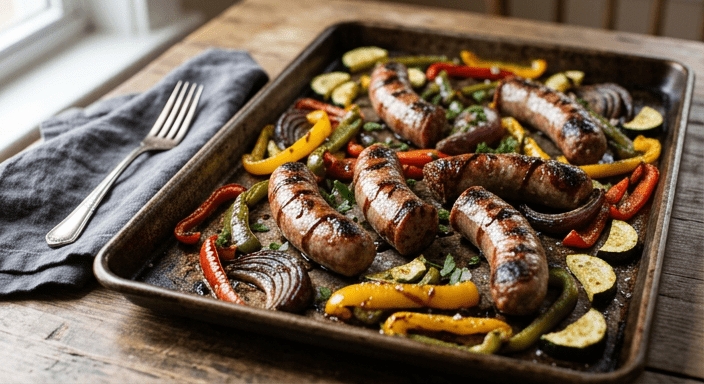
Sheet pan sausage and vegetables is one of the genuinely great weeknight dinners — Italian sausage links roasted at high heat alongside bell peppers, red onion, and zucchini until the vegetables develop caramelized edges and the sausages blister and brown and split slightly at the skin. Ten minutes of prep, twenty-five minutes in the oven, one pan to wash. Finished with a drizzle of balsamic glaze that goes sticky and sweet-acidic against everything hot from the oven.
It’s also three dinners for the effort of one if you cook enough of it. More on that at the end.
The One Thing That Ruins Sheet Pan Dinners
Crowding the pan. That’s it. That’s the entire list of things that can go wrong with this recipe, and it’s the thing that almost every version of this dish does wrong.
Here’s what happens when vegetables are crowded on a sheet pan: they release moisture as they heat up, but that moisture can’t evaporate fast enough because the pieces are too close together. Instead of roasting in dry hot air — which is what caramelizes the surface and creates flavor — the vegetables sit in a cloud of their own steam. The result is soft, pale vegetables that taste boiled rather than roasted, and sausages that never develop the browned, blistered exterior that makes this dish worth making.
The fix is either using a larger sheet pan, using two pans, or cooking less at once. Single layer, space between pieces, 425°F, upper rack. That combination produces the vegetables you actually want — slightly charred at the edges, concentrated in flavor, with enough texture left that they still have something to offer after twenty-five minutes in the oven.
425°F and Not a Degree Lower
High heat is not optional in this recipe. Lower temperatures extend the time the vegetables spend in the oven before they caramelize, which gives them more time to release moisture and go soft. 425°F hits fast enough that the surface of the vegetables caramelizes before the interior goes completely limp. The upper rack position adds radiant heat from above, which accelerates the browning on the sausage skin.
If your oven runs cool — and many do — go to 450°F and check five minutes early. The goal is vegetables with actual color, not just softened peppers in their own liquid.
Three Colors of Bell Pepper and Why It Matters
Red, yellow, and green peppers are called for here and it’s not just for visual variety. Each has a different flavor. Red peppers are the sweetest — they’re fully ripened and have spent the most time developing sugars. Yellow peppers are milder and slightly fruity. Green peppers are the most bitter and least sweet of the three. Together they create a range of flavor across the same dish rather than a single undifferentiated sweetness. If you can only find one or two colors, use whatever’s available — but the three-color approach is worth seeking out.
The Balsamic Glaze Finish
The balsamic glaze goes on immediately out of the oven, drizzled over everything while it’s still hot. The heat from the pan causes it to reduce slightly and thicken further as it hits the surface, turning it into a sticky lacquer that coats the vegetables and sausage rather than running off the pan. The sweet-acidic quality cuts through the fat of the sausage and makes everything taste more complete.
Store-bought balsamic glaze is already reduced and sweetened and widely available — look for it near the oils and vinegars. A small bottle lasts a long time and improves a wide range of things. This is not the same as regular balsamic vinegar, which is too thin and too sharp for this application.
Sweet vs Hot Sausage
The choice between sweet and hot Italian sausage changes the character of the dish significantly and both are correct depending on who’s eating. Sweet Italian sausage has fennel and mild spices — it lets the balsamic glaze and the caramelized vegetables do the flavor work, and the whole dish skews slightly sweet-savory and approachable. Hot Italian sausage pushes the heat into the foreground and makes the balsamic glaze feel like a cooling counterpoint rather than a complement.
If you’re cooking for heat-sensitive people, go sweet. If you’re cooking for yourself or people who like bold food, go hot. If you’re not sure, go sweet and add crushed red pepper flakes to individual portions at the table.
Three Meals From One Pan
This recipe scales easily and leftovers are genuinely useful rather than just acceptable.
Dinner one: straight from the pan, served as-is or over white rice.
Dinner two: slice the leftover sausage into coins, toss with cooked pasta, the leftover vegetables, and a spoonful of marinara or olive oil and parmesan. Ten minutes to reheat.
Dinner three: stuff the remaining sausage and peppers into a toasted hoagie roll with provolone. Two minutes under the broiler if you want the cheese melted. This is arguably the best of the three applications.
One thirty-minute cooking session, three actual dinners. Cook double from the start if your household will use it.
What to Serve Alongside
The pan already has protein and vegetables — it’s a complete dinner. If you want something to stretch it or soak up the balsamic glaze: crusty bread is the answer. Garlic bread. A simple green salad with Italian dressing. Or serve it over pasta or rice as mentioned above.
Storage
Refrigerate in an airtight container for up to four days. Reheat on a sheet pan at 375°F for about ten minutes to restore some of the roasted texture — the microwave softens everything and eliminates the caramelized edges that make the dish worth eating.
Sheet Pan Sausage and Vegetables
Ingredients
Meat & Protein
- 4 Italian sausage links sweet or hot, your preference
Produce
- 1 red bell pepper sliced into strips
- 1 yellow bell pepper sliced into strips
- 1 green bell pepper sliced into strips
- 1 red onion sliced into wedges
- 2 zucchini sliced into half-moons about half an inch thick
- 4 garlic cloves minced
- 2 tbsp fresh parsley roughly chopped, for garnish
Pantry & Canned Goods
- 3 tbsp olive oil
- 2 tbsp balsamic glaze store-bought, for finishing
Seasonings & Spices
- 1.5 tsp Italian seasoning
- 1 tsp garlic powder
- 0.5 tsp smoked paprika
- 0.75 tsp kosher salt
- 0.5 tsp black pepper
- 0.25 tsp crushed red pepper flakes optional
Instructions
- Preheat the oven to 425°F and position a rack in the upper third of the oven. Line a large sheet pan with parchment paper. The high heat and upper rack position are not optional — they’re what produce caramelized vegetables instead of steamed ones.
- Slice all the vegetables and spread them across the sheet pan. Drizzle with olive oil and add the minced garlic, Italian seasoning, garlic powder, smoked paprika, salt, pepper, and crushed red pepper flakes if using. Toss everything to coat evenly, then spread back into a single layer with as much space between pieces as possible. This is the most important step in this recipe — crowded vegetables steam. Spaced vegetables roast. If your pan looks full, use two pans.
- Nestle the sausage links on top of the vegetables, spaced evenly across the pan. Place in the oven and roast for 15 minutes. Flip the sausages and stir the vegetables, redistributing them into a single layer again if they’ve shifted. Return to the oven for another 10 to 15 minutes until the sausages are deeply browned and cooked through to 160°F and the vegetables have caramelized edges.
- Remove from the oven. Drizzle the balsamic glaze over everything — it will hit the hot pan and reduce slightly into a sticky, sweet-acidic finish that ties the whole dish together. Scatter fresh parsley over the top and serve directly from the pan.