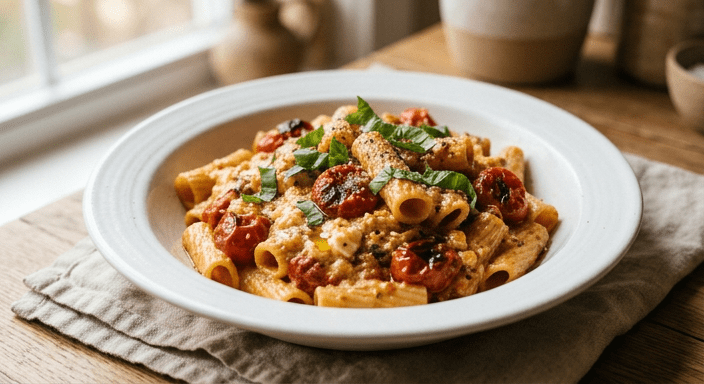
Spicy Vodka Pasta (Penne alla Vodka)
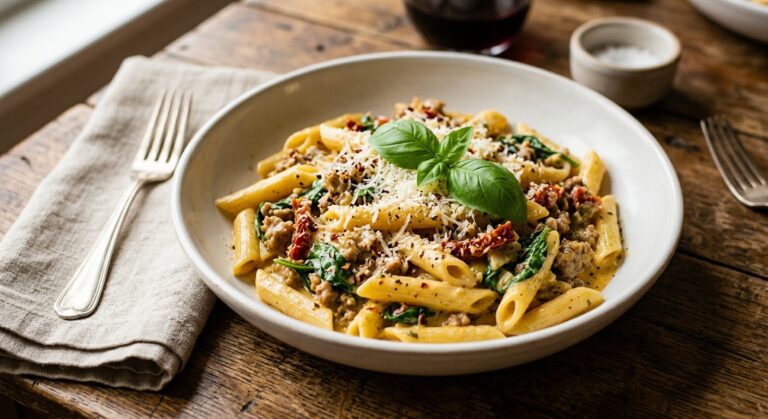
Penne alla vodka is the pasta that convinced a generation of home cooks that cream sauce was complicated. It isn’t. Caramelized tomato paste, garlic, onion, vodka, heavy cream, and parmesan — built in one pan in the time it takes to boil pasta. The sauce is silky, slightly spicy, and rose-colored in a way that looks like you know what you’re doing even if you’ve never made it before. Thirty minutes. No blender. No long simmer. No tricks.
The vodka is not optional and it is not a gimmick. It’s in here for a chemical reason that actually matters, and understanding it will make you stop questioning the recipe every time you make it. More on that in a moment.
Why the Vodka Matters
Flavor compounds in food are either water-soluble — meaning they dissolve in water and end up in your sauce when you add liquid — or fat-soluble — meaning they dissolve in oil and end up in your sauce when you add cream or butter. Most flavor compounds in tomatoes fall into one of these two categories and get extracted just fine by the water and cream in a standard tomato cream sauce.
Some don’t. Tomatoes contain a specific set of aromatic compounds that are neither water-soluble nor fat-soluble. They are alcohol-soluble. Vodka, which is essentially ethanol and water, extracts these compounds from the tomato paste and releases them into the sauce in a way that water and cream simply cannot. The result is a more complex, more aromatic tomato flavor that you can taste the difference in even without knowing why it’s there.
The vodka cooks off completely. The alcohol evaporates when you simmer the sauce — what stays is the flavor it extracted. Nobody is eating boozy pasta. Use it.
Any plain vodka works. This is not the time for the expensive bottle. The compounds you’re extracting from the tomato paste cannot distinguish between a $10 handle and a $50 craft vodka. Use whatever is cheapest.
The Tomato Paste Method
Most vodka sauce recipes use canned crushed tomatoes or whole peeled tomatoes. This recipe uses tomato paste exclusively and the difference is significant.
Tomato paste is already concentrated — it’s been cooked down to remove most of the water content, which means it has a more intense tomato flavor than canned tomatoes and requires no additional reduction time. Caramelize it in the pan for three to four minutes before adding anything else and it transforms from a raw, slightly tinny tomato flavor into something rounder, deeper, and sweeter that tastes like it cooked for an hour.
The caramelization step is the most important thing in this recipe. Watch the paste as it cooks against the bottom of the pan — it should visibly darken from bright red to a deep rust-brown, and it should stick slightly to the pan before you add the vodka. If it’s still bright red after two minutes, the heat is too low. Push the heat up and keep stirring. Don’t burn it, but don’t be timid about getting color on it either.
No Blending Required
Many penne alla vodka recipes call for blending the sauce before adding the cream — the idea being that blending produces a silkier, more uniform texture. It also adds a step, a blender to wash, and a brief cooling period that slows the whole process down.
The tomato paste method eliminates the need for blending entirely. Because you’re starting with a smooth paste rather than chunky canned tomatoes, the sauce is already smooth when the cream goes in. Stir in the cream, simmer for a few minutes, add the parmesan, toss the pasta. That’s it. One pan, no blender, thirty minutes.
The Spice Level
One teaspoon of crushed red pepper flakes goes into this sauce. At that quantity it produces a moderate, building warmth — the kind that you notice after a few bites rather than the kind that hits you immediately on the first. It’s called spicy vodka pasta rather than just vodka pasta for a reason.
If you’re cooking for heat-sensitive people, reduce to half a teaspoon. If you want more heat, go to a full teaspoon and a half or add a pinch of cayenne. The cream and parmesan temper heat significantly — what reads as very spicy in the pan will read as moderate on the plate. Start at one teaspoon and adjust from there.
Pasta Shape
Rigatoni is the call over penne. Same family — short, tubular — but rigatoni has ridges on the outside and a wider opening that catches and holds the sauce both inside and outside the tube simultaneously. Every forkful has more sauce contact than penne, which has smooth sides and catches the sauce only inside. If all you have is penne, it works perfectly fine. Rigatoni is the slight upgrade worth seeking out.
Substitutions
Vodka: Some recipes use white wine as a substitute. It works — the wine’s acidity and alcohol do some of the same flavor extraction work — but the result tastes different. Wine adds a fruitiness that changes the sauce’s character. Vodka is neutral and lets the tomato and cream flavors lead. If you need to skip the alcohol entirely, increase the tomato paste by one tablespoon and add a splash of chicken broth in its place. The sauce will be good. It won’t be vodka pasta.
Heavy cream: Half and half produces a thinner, lighter sauce. The flavor is still there but the coating quality on the pasta is reduced. Full heavy cream is the correct call for this dish.
Parmesan: Pecorino Romano works as a substitute — it’s sharper and saltier, so use slightly less. Grana Padano is milder and also works. Pre-grated parmesan from a container produces a grainier sauce than freshly grated. Buy the block.
What to Serve With It
Crusty bread is the non-negotiable accompaniment — the sauce that ends up at the bottom of the bowl is too good to leave behind and you need something to drag through it. A simple green salad with lemon vinaigrette cuts the richness of the cream sauce. That’s the whole meal. Nothing elaborate.
Leftovers
Refrigerate for three days. Reheat in a pan over low heat with a splash of cream or pasta water — the sauce thickens overnight and needs a little liquid to come back to the right consistency. Microwave works but stir halfway through. The vodka pasta does not freeze well — the cream sauce breaks on thawing and the pasta texture suffers.
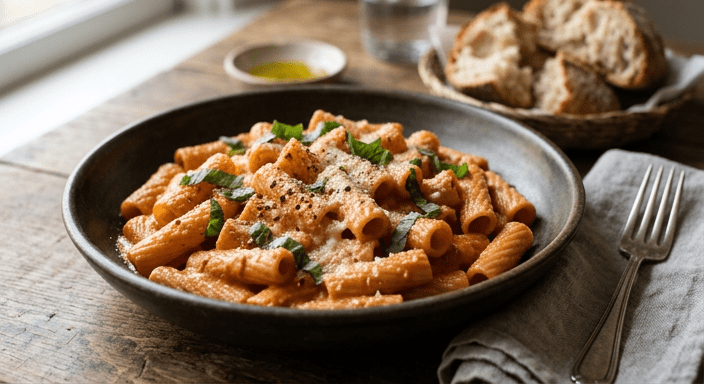
Spicy Vodka Pasta (Penne alla Vodka)
Ingredients
Produce
- 5 garlic cloves minced
- 1 yellow onion diced
- 0.5 cup fresh basil roughly torn, for finishing
Dairy
- 1 cup heavy cream
- 1 cup parmesan cheese freshly grated, plus more for serving
- 2 tbsp unsalted butter
Pantry & Canned Goods
- 12 oz rigatoni pasta or penne
- 4 tbsp tomato paste
- 0.5 cup vodka any plain vodka — does not need to be premium
- 1 tbsp olive oil
Seasonings & Spices
- 1 tsp crushed red pepper flakes adjust to heat preference
- 0.75 tsp kosher salt plus more for pasta water
- 0.5 tsp black pepper
Instructions
- Bring a large pot of heavily salted water to a boil. Cook the rigatoni or penne according to package directions until just al dente — pull it one minute early. Reserve one full cup of pasta water before draining. Set aside.
- While the pasta cooks, heat the olive oil and butter in a large skillet over medium heat. Add the diced onion and cook for 5 to 6 minutes, stirring occasionally, until softened and translucent. Add the minced garlic and crushed red pepper flakes and cook another 60 seconds until fragrant.
- Add the tomato paste directly to the pan. Cook over medium heat, stirring constantly and pressing it against the bottom of the pan, for 3 to 4 minutes until the paste darkens significantly from bright red to a deep rust-brown color. This step — caramelizing the tomato paste — is the most important step in this recipe. It eliminates the raw, slightly acidic flavor and transforms it into something rounder, sweeter, and dramatically more complex. Don’t rush it and don’t skip it.
- Carefully pour in the vodka — it will sizzle. Stir to deglaze the pan and scrape up any stuck tomato paste. Cook for 2 minutes until the sharp alcohol smell cooks off and the liquid reduces by about half. The sauce should smell rounded and slightly fruity rather than boozy at this point.
- Reduce heat to medium-low. Pour in the heavy cream and stir to combine — the sauce will turn a deep salmon-pink color immediately. Simmer gently for 3 to 4 minutes until the sauce thickens enough to coat the back of a spoon. Add the salt and black pepper.
- Add the drained pasta directly to the sauce. Toss to coat every piece, adding reserved pasta water a splash at a time until the sauce is glossy and clings to the pasta without pooling at the bottom. Reduce heat to low and add the parmesan a handful at a time, stirring between additions until fully melted and incorporated.
- Remove from heat. Scatter torn fresh basil over the top. Serve immediately with extra parmesan and crushed red pepper flakes at the table.