Cowboy Butter Shrimp Pasta
Cowboy butter shrimp pasta is the dinner that happens when you apply the most aggressively flavorful butter sauce in the American cooking canon to a pound and a half of large shrimp and toss the whole thing with linguine. Garlic, Dijon mustard, lemon, fresh parsley, thyme, smoked paprika, and red pepper flakes — all of it built directly in the pan in about five minutes, no cream, no shortcuts, no compromises. Twenty-five minutes from cold pan to the best pasta you’ve made in a while.
If you know cowboy butter as the sauce that comes alongside a steak at a steakhouse — the compound butter with garlic and herbs that you either use all of or deeply regret not using all of — this is that, turned into a pasta sauce. If you’ve never encountered it before, you’re about to understand why it has a name that implies there are no rules.
What Makes This Different From Every Other Garlic Butter Shrimp Pasta
There are approximately ten thousand garlic butter shrimp pasta recipes online. Most of them are olive oil, garlic, butter, lemon, and parsley — shrimp scampi by another name. Fine recipe. Completely forgettable.
The cowboy butter version is different in specific ways. The Dijon mustard adds a low background tang that bridges the lemon and the garlic and gives the sauce depth that straight garlic butter doesn’t have. The smoked paprika adds a warmth and smokiness that makes the shrimp taste like they’ve been somewhere interesting before they hit the pasta. The thyme adds an herby, slightly floral note that parsley alone doesn’t produce. None of these ingredients is exotic or hard to find. Together they produce a sauce that has significantly more going on than the sum of its parts.
And there’s no cream. This is not a cream sauce. The butter emulsifies with the starchy pasta water to coat the linguine in a glossy, silky layer that clings without being heavy. The result is lighter than a cream pasta and more complex in flavor. If you want to finish it with parmesan, grate it over individual bowls at the table — adding it to the pan sauce thickens it considerably and turns it into a different dish.
The Dijon Is Doing Something
At one tablespoon across a dish that serves four people, the Dijon is not going to make this taste like a mustard situation. What it does is emulsify. Dijon contains compounds that help fat and water mix — the same property that makes it an essential ingredient in vinaigrette. In this application, it helps the butter stay integrated with the lemon juice and chicken broth rather than separating into a greasy pool at the bottom of the pan. The sauce stays together. It coats the pasta evenly. The Dijon is responsible for that.
Don’t substitute yellow mustard. Yellow mustard is sharper, more vinegary, and doesn’t have the same emulsifying properties. Dijon specifically.
Six Cloves of Garlic Is Correct
This is a garlic-forward sauce without cream to temper the garlic flavor, so the garlic is doing more of the flavor work than it would in a cream-based dish. Six cloves across a pound and a half of shrimp and twelve ounces of pasta is not overwhelming — it’s the right ratio. If you’re sensitive to garlic, reduce to four. Don’t go below four or the sauce loses its identity.
Building the Sauce in the Same Pan as the Shrimp
The shrimp sear first, come out of the pan, and the sauce gets built in the same pan with the browned bits from the sear still at the bottom. Those bits — fond — dissolve into the butter and garlic when the liquid goes in and add a savory depth that straight butter-garlic can’t replicate. Don’t wipe the pan between the shrimp and the sauce. Every bit of residue in that pan is flavor you’d otherwise lose.
What to Serve With It
The pasta is the dinner. Crusty bread to drag through the extra butter sauce that ends up at the bottom of the bowl — there will be extra and it would be a genuine loss to waste it. A simple green salad with lemon vinaigrette. Roasted asparagus if you want a vegetable in the meal. Nothing complicated alongside — the sauce is doing enough.
Substitutions
Shrimp: Jumbo shrimp works identically — add thirty seconds to the sear time per side. Bay scallops are an excellent substitute; sear them the same way and the cowboy butter sauce coats them perfectly.
Pasta: Spaghetti is the closest substitute to linguine and works identically. Fettuccine works but is slightly thick — the sauce has to work harder to coat it. Avoid short pasta shapes — the sauce is built for long noodles.
Fresh herbs: Dried thyme at one third of the volume works as a substitute. Fresh parsley is harder to substitute — dried parsley is too muted. If you don’t have fresh parsley, use chives or skip and add extra lemon zest.
No alcohol version: The recipe uses chicken broth for the liquid component of the sauce. This is already the non-alcoholic version — no substitution needed.
Storage
Refrigerate for two days — the shrimp is the limiting factor. Reheat in a pan over low heat with a splash of chicken broth or water; the butter sauce solidifies overnight and needs gentle heat to come back together. The microwave works but the shrimp gets rubbery — the pan is worth the extra two minutes.
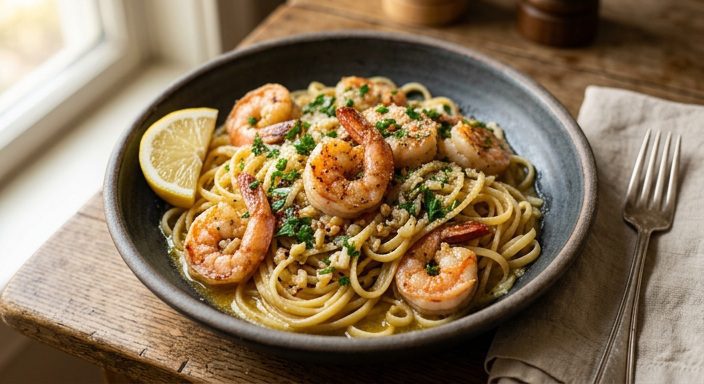
Cowboy Butter Shrimp Pasta
Ingredients
Meat & Protein
- 1.5 lb large shrimp peeled, deveined, tails removed — fresh or thawed from frozen
Produce
- 6 garlic cloves minced
- 1 lemon juiced
- 1 lemon cut into wedges, for serving
- 3 tbsp fresh parsley roughly chopped
- 1 tbsp fresh thyme sprigs
Dairy
- 6 tbsp unsalted butter divided — 2 tbsp for shrimp sear, 4 tbsp for sauce
Pantry & Canned Goods
- 12 oz linguine pasta
- 1 tbsp Dijon mustard
- 1 tbsp olive oil
- 0.25 cup chicken broth low sodium
Seasonings & Spices
- 0.75 tsp smoked paprika
- 0.5 tsp crushed red pepper flakes
- 0.5 tsp black pepper
- 0.5 tsp kosher salt divided
- 0.25 tsp garlic powder
Instructions
- Bring a large pot of heavily salted water to a boil. Cook linguine according to package directions until just al dente. Reserve one cup of pasta water before draining. Set pasta aside.
- Pat the shrimp completely dry with paper towels. Season with smoked paprika, garlic powder, salt, and black pepper. Heat the olive oil and 2 tablespoons of butter in a large skillet over medium-high heat until the butter foams and just begins to turn golden. Add the shrimp in a single layer — work in two batches if needed. Sear without touching for 60 to 90 seconds until the bottom edges are pink and slightly golden. Flip and cook another 60 seconds. Remove to a plate — they are not fully cooked yet and will finish in the sauce.
- Reduce heat to medium. Add the remaining 4 tablespoons of butter to the same pan. Once melted, add the minced garlic and cook for 60 seconds until fragrant and just barely starting to turn golden at the edges. Add the fresh thyme and stir to combine.
- Whisk in the Dijon mustard — it will look strange for a moment, then incorporate smoothly. Add the chicken broth and lemon juice. Let the sauce simmer and reduce for 2 minutes, scraping up any browned bits from the shrimp sear. Add the crushed red pepper flakes. Taste and adjust salt.
- Add the drained linguine to the pan and toss to coat in the butter sauce. Add reserved pasta water a splash at a time if the sauce seems too tight — the starch in the pasta water helps the sauce cling to the linguine. Return the shrimp to the pan and toss everything together over low heat for 60 seconds until the shrimp are fully cooked through and the whole pan is glossy and cohesive.
- Remove from heat. Scatter fresh parsley over the top. Serve immediately with lemon wedges alongside for squeezing over at the table. Extra crushed red pepper flakes on the side for anyone who wants more heat.