
We Spent $1,400 a Month on DoorDash — Here’s the Grocery Delivery System That Stopped It
There’s a version of this post where I ease into it. Tell you a little about our family, set the scene, build up to the number slowly.
I’ll skip that. The number is $1,400. One month. DoorDash, takeout, and delivery fees we’d stopped registering as real money.
I’m a Director of Finance. My spouse is a nurse practitioner. We are two reasonably intelligent adults who managed to not look at this total for the better part of four months. If that makes you feel better about your own situation, you’re welcome.
The fix wasn’t willpower. It wasn’t a meal kit subscription that costs almost as much as delivery and still requires you to figure out what to do with a mystery spice packet. It was a system — grocery delivery, a meal planner, and a ruthlessly low bar for what counts as cooking on a Tuesday night.
Here’s exactly what we built.
Why Delivery Becomes a Trap
Everyone knows delivery is expensive. That’s not the problem.
The problem is what it does to your ability to cook over time. When you stop cooking regularly, the mental library of “things I can make tonight” shrinks because you never practice accessing it. After a few months of heavy delivery, standing in front of a full fridge at 6pm feels like being asked a question in a language you used to speak but haven’t in a while.
That’s where we were. The goal wasn’t to become a different kind of family. It was to remove the friction that was sending us back to the app every night — and replace it with a system that was easier than ordering out.
Turns out that’s not as hard as it sounds.
Step One: Get Groceries Delivered
The single biggest barrier to cooking on a weeknight isn’t skill. It’s not time. It’s the idea of going to the store after everything else the day asked of you.
So don’t.
Here’s an honest breakdown of the main options:
Walmart Delivery — What We Actually Use
Best for: Families who want low prices without overthinking it
Walmart+ membership runs about $13/month (or $98/year). For that you get free delivery on orders over $35, member pricing on fuel, and a Paramount+ subscription I keep forgetting I have. If you’re ordering groceries more than once a month the membership pays for itself immediately.
What nobody mentions about Walmart delivery: the substitution system is actually good now. When something’s out of stock you get a notification and can approve or reject the substitute before the order ships. Early grocery delivery was basically a slot machine. This is better.
One honest caveat: produce quality is inconsistent. For avocados or anything I care about being fresh, I’ll plan around it or grab it separately.
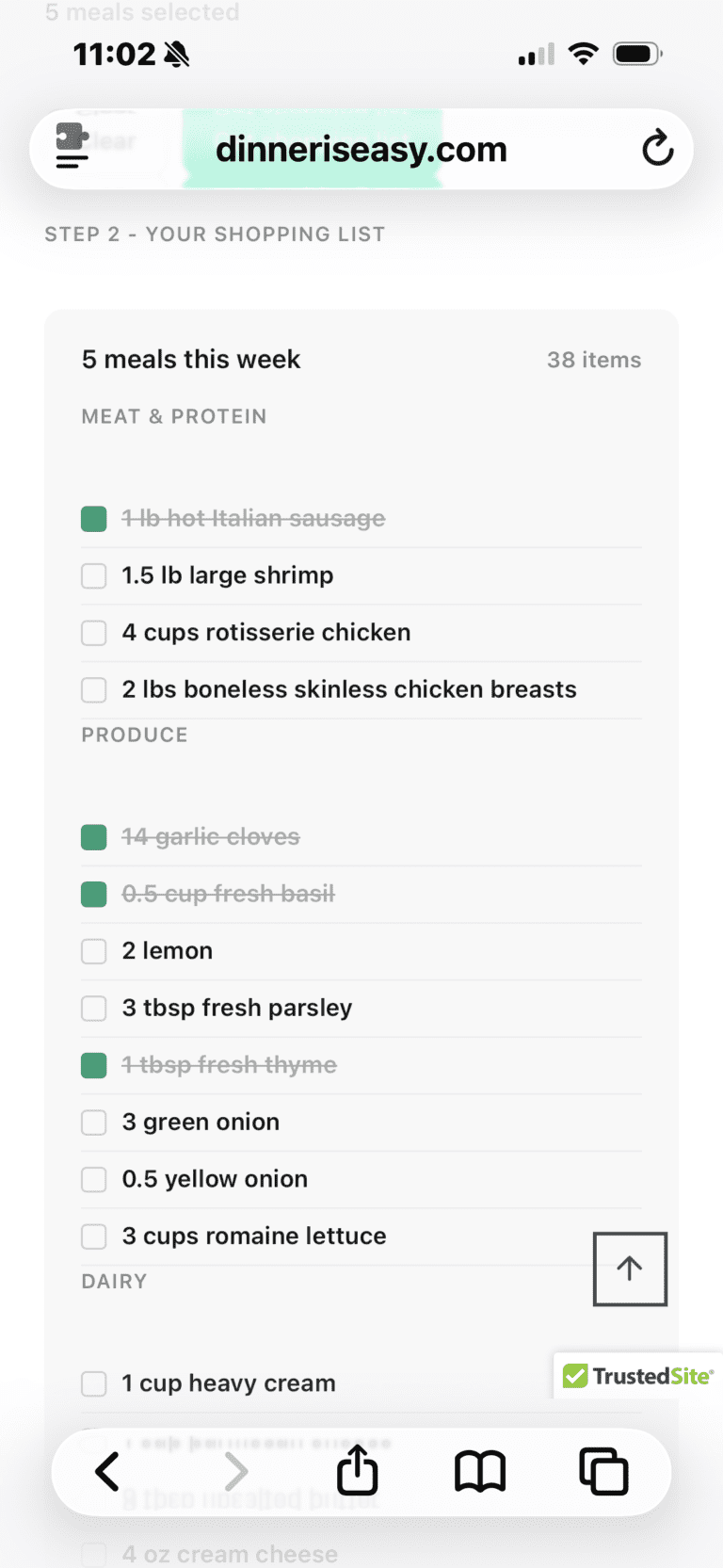
Our workflow: Sunday evening, open the meal planner, pick 5-6 dinners for the week, generate the shopping list, drop it into the Walmart cart. Order placed. Groceries show up Monday. Total time: about 15 minutes.
[Start Walmart+ Free Trial →] (affiliate link)
Instacart — Best When You Need Options
Best for: Shopping multiple stores or finding specific ingredients
Instacart connects to essentially every grocery store in your area — Kroger, Publix, Costco, Aldi, specialty stores. When Walmart doesn’t carry something or I want a specific cut of meat I can’t find there, Instacart is how I get it without losing an hour.
The downside is price. Item prices are often marked up from in-store, and delivery fees add up without a membership. Instacart+ (~$9.99/month) removes delivery fees on orders over $35 but you’re still dealing with the markups.
More expensive than Walmart delivery. Still significantly cheaper than DoorDash for dinner.
Amazon Fresh — Best If You’re Already a Prime Member
Best for: Prime members who want one fewer subscription to manage
If you have Amazon Prime, Amazon Fresh is included at no extra delivery cost on orders over $35 in most areas. Selection is solid, prices are reasonable, and same-day or next-day windows are usually available.
Where Amazon Fresh genuinely wins: pantry staples. Canned goods, pasta, condiments, spices — everything you need to stock a kitchen that actually functions. If your pantry has been neglected because you’ve been ordering out for months, this is a good place to rebuild it.
Where it falls short: fresh produce and meat selection isn’t as broad as a full-service grocery store. Works best as a complement to another service rather than your only option.
[Start Amazon Fresh →] (affiliate link)
Step Two: Start With Zero Cooking
Here’s where most people go wrong when they try to stop ordering delivery: they overcorrect. They plan elaborate dinners. They buy ingredients they don’t know how to use. By Wednesday they’re back on the app ordering pad thai.
Don’t do that.
Start with meals that require no cooking at all. This isn’t cheating. This is how you rebuild the habit without the pressure.
No-cook dinners that are actually good:
- Chicken and Avocado Salad — rotisserie chicken, avocado, a few pantry ingredients. 10 minutes.
- Deli turkey wraps with hummus, cucumber, and shredded carrots
- Greek salad with store-bought pita and good feta
- What I call a “dinner board” and my kids call “snack dinner” — deli meat, cheese, crackers, grapes, whatever’s in the fridge. Nobody complains. Nobody cooks.
You’re eating a real dinner at home for $12 instead of $45. That’s a win. Full no-cook recipe library here.
Step Three: Add Heat Gradually
Once not ordering out is the habit — which takes about two weeks — you start layering in easy cooked meals. The bar here is low on purpose.
Slow cooker meals: Dump everything in before work. Come home to dinner. This is not cooking. This is logistics. Browse slow cooker recipes →
Sheet pan dinners: One pan, oven does the work, 25-30 minutes. Garlic Butter Steak Bites with Potatoes is a good first one — feels like a real dinner, requires almost nothing from you.
Pasta: Boiling water is not cooking. A solid pasta dinner with a jarred sauce you’ve upgraded with garlic and olive oil takes 20 minutes and costs $6. Browse pasta recipes →
The goal is a rotation of 10-15 dinners your household reliably likes that you can pull off on a Tuesday when everyone is tired. That’s the whole system.
The Tool That Ties It Together
I built the Meal Planner on this site for us. Not for the blog. For our actual life.
Pick the dinners you want for the week. It generates a shopping list organized by category. You drop that list into your Walmart cart. Done.
The part that made the real difference: having the list ready before you open the grocery app. Without it you’re improvising in the cart, second-guessing, and ending up back on DoorDash Wednesday because you forgot one ingredient. The planner removes that gap entirely.
The Honest Math
| Before | After | |
|---|---|---|
| Delivery and takeout | $1,400/month | ~$200/month (occasional) |
| Walmart+ membership | $0 | $13/month |
| Groceries | Already buying some | ~$600-800/month |
| Total | $1,400+ | ~$813-1,013/month |
That’s $400-600 back every month. Without doing anything dramatic.
We still order out sometimes. New baby plus deadline plus tweens visiting plus someone has a cold — sometimes you just order the pizza and let it go. But it’s the exception now instead of the default. That’s the whole point.
Where to Start
- Sign up for Walmart+ or whichever service delivers to your area
- Go to the Meal Planner and pick 3-4 dinners for this week — start with no-cook meals
- Use the shopping list to fill your cart
- Cook nothing on the first night. Rotisserie chicken and a bag salad counts.
- Do it again next week
The DoorDash app will still be on your phone. But maybe it stops being the first thing you reach for.
Some links in this post are affiliate links, meaning I may earn a small commission if you sign up or purchase — at no extra cost to you. I only recommend services we actually use. Full disclosure here.