Pan-Seared Pork Chops with Garlic Butter
Pork chops have a reputation problem, and it’s entirely deserved — but the reputation belongs to overcooked pork chops, not pork chops. The dry, rubbery, gray-through-the-middle chop that made you dread them as a kid was cooked to 160°F, which was the USDA-recommended safe temperature until 2011, when they revised it down to 145°F. Fourteen years later, most home cooks still haven’t gotten the memo about the delicious possibilities of pan-seared pork chops. You’re about to get the memo.
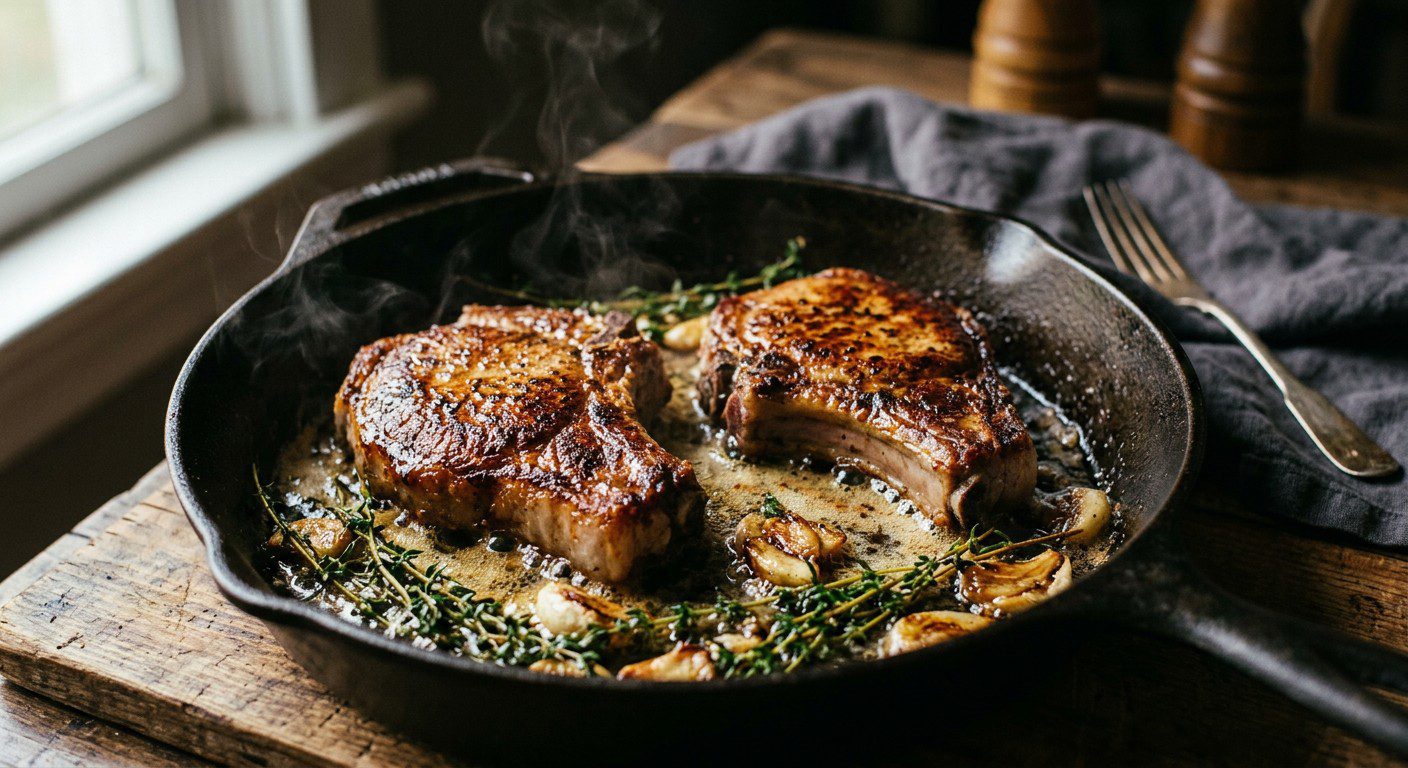
A pork chop cooked to 145°F and rested for five minutes is juicy, slightly pink in the center, and tastes like something you’d order at a restaurant. The cast iron sear gives it a golden crust with real flavor. The garlic butter baste in the last two minutes adds richness and aroma that ties the whole thing together. Start to finish, twenty minutes. This is the pork chop recipe that fixes whatever relationship you currently have with pork chops, particularly if you haven’t tried pan-seared pork chops yet.
Why 145°F and not 160°F
The science here is straightforward. Pork is safe to eat at 145°F with a three-minute rest — the internal temperature is high enough to eliminate any pathogens, and the meat retains its moisture because the proteins haven’t fully contracted and expelled their liquid. At 160°F, those proteins are fully contracted, the juice is gone, and you’re left with something that needs to be chewed into submission.
The fix is a meat thermometer. It costs about $15, takes thirty seconds to use, and is the single most reliable way to cook pork correctly. Pull the chop at 140°F — carryover heat during the rest will bring it to 145°F. This is not a guess. It is a measurement.
The pan has to be actually hot
Three minutes on high heat before the pork goes in. Not medium-high — high. The pan should be smoking slightly when the oil hits it, and the chop should make an immediate, loud sizzle the moment it makes contact. If it doesn’t, the pan isn’t hot enough and you’ll get gray, steamed pork instead of a golden crust.
Cast iron holds and distributes heat better than any other pan for this purpose. Stainless steel works. Non-stick does not — it can’t handle the high heat required and won’t give you the same crust.
Pat the chops completely dry first
Any moisture on the surface of the meat creates steam in the pan. Steam prevents the Maillard reaction — the browning that creates flavor and crust. Paper towels, both sides, thirty seconds. This is the same rule that applies to steak, salmon, chicken breast, and anything else you want to sear. Dry surface equals crust. Wet surface equals gray.
Bone-in is the right call
Bone-in rib chops or center-cut chops stay juicier than boneless for two reasons: the bone conducts heat differently, slowing the cooking near the center and giving you a larger window between done and overdone. The fat cap along the edge of a bone-in chop also renders during the cook and bastes the meat naturally. If you’re buying boneless chops, they’ll work — just watch the temperature closely because they overcook about a minute faster.
The butter baste
Once the chops are seared on both sides, the heat comes down to medium and the butter goes in with smashed garlic and fresh thyme. The butter foams, the garlic blooms, and you spend the next minute or two tilting the pan and spooning that aromatic butter continuously over the top of the chops. It’s the same technique used to finish steaks and thick fish fillets — it adds a final layer of fat and flavor and keeps the surface from drying out in the last phase of cooking.
Use cold butter cut into pieces. Cold butter foams longer and stays emulsified in the pan instead of breaking into grease.
What to serve with it
The garlic butter left in the pan after the chops rest is a sauce — spoon it directly over the chops and let it run onto whatever’s underneath. Mashed potatoes are the obvious answer and they’re obvious for a reason. Roasted baby potatoes from a sheet pan work just as well and require no attention while the chops cook. Simple green beans or a wedge of roasted cabbage round it out without competing with the pork.
Storage
Pork chops reheat better than most people expect if you do it in a pan with a splash of water or chicken broth over medium-low heat — the added liquid steams them gently instead of drying them out further. Two to three days in the fridge. Don’t reheat in the microwave if you can avoid it.
My alternative pick(s)
If this recipe caught your eye, I have two more easy recipes you should try – Air Fryer Steak and Potatoes (don’t knock it until you try it) or the One Pan Garlic Butter Steak Bites with Potatoes are both quick, easy and delicious. And don’t forget you can add any recipe from dinneriseasy.com to the meal planner and generate the shopping list with all of the ingredients needed. If you’re on your phone, the shopping list let’s you mark off each item as you go with the click of a button.
Pan-Seared Pork Chops with Garlic Butter
Ingredients
Meat & Protein
- 2 bone-in pork chops rib chops or center-cut, at least 1 inch thick, brought to room temperature for 15 minutes
Produce
- 4 garlic cloves smashed, skin on
- 4 sprigs fresh thyme
Dairy
- 3 tbsp unsalted butter cold, cut into pieces
Pantry & Canned Goods
- 1 tbsp olive oil
Seasonings & Spices
- 1 tsp kosher salt
- 0.5 tsp black pepper freshly cracked
- 0.5 tsp garlic powder
- 0.5 tsp smoked paprika
Instructions
- Pull the pork chops from the fridge 15 minutes before cooking. Pat completely dry with paper towels — both sides and edges. Season generously on all sides with kosher salt, black pepper, garlic powder, and smoked paprika.
- Heat a cast iron skillet over high heat for 3 minutes until smoking. Add the olive oil and swirl to coat. Lay the pork chops in the pan — you should hear an immediate aggressive sear. Do not move them.
- Sear for 3 to 4 minutes until deeply golden and releasing naturally from the pan. Flip once. If they stick, they’re not ready — give them another 30 seconds.
- Reduce heat to medium. Add the butter, smashed garlic cloves, and thyme sprigs to the pan. As the butter melts and foams, tilt the pan slightly and use a spoon to continuously baste the top of the chops with the butter for 1 to 2 minutes.
- Check internal temperature — pull at 140°F. Transfer to a plate or cutting board and rest for 5 minutes. Temperature will carry over to 145°F during rest. Spoon the garlic butter from the pan over the top just before serving.