Honey Sriracha Salmon
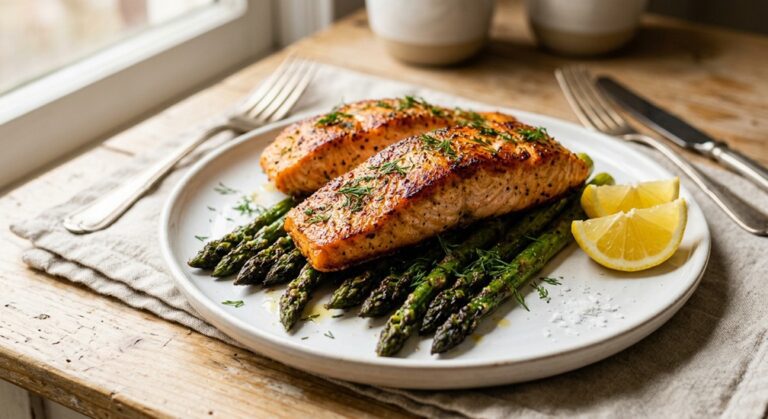
Honey sriracha salmon is one of those recipes that sounds like it requires more skill than it does. A sticky, caramelized glaze with heat and sweetness over a perfectly cooked salmon fillet — it looks like restaurant food and takes about 25 minutes start to finish on a single sheet pan. The trick that most recipes miss is the broil at the end. Roasting the salmon gets it cooked. Two minutes under the broiler is what turns the glaze into something lacquered and slightly charred at the edges. That’s the version worth making.
The glaze is honey, sriracha, soy sauce, rice vinegar, fresh garlic, and fresh ginger. The rice vinegar adds a brightness that cuts through the richness of the salmon and stops the sauce from being cloying. The ginger gives it depth that garlic alone doesn’t. Most versions of this recipe skip both and the result is fine but flat — sweet heat on salmon, nothing more. This version actually has layers.
Why the Broil Step Matters
A 400°F oven is good for cooking salmon. It is not hot enough to caramelize a honey-based glaze in the 8 to 10 minutes the fish needs to cook through. You end up with a cooked salmon with a wet, sticky glaze on top that hasn’t had a chance to set or char. The broiler, even for 2 minutes, changes the equation completely — the sugars in the honey caramelize, the edges of the glaze catch slightly, and the whole surface becomes glossy and tacky the way a proper glaze should be.
Watch it closely. Two to three minutes under the broiler is the window. It goes from caramelized to burned faster than you’d expect with the honey, and there’s no recovering from burned honey.
The One Thing That Determines Whether the Glaze Sticks
Pat the salmon dry before you glaze it. Every surface — flesh and skin. Any moisture on the surface of the fish dilutes the glaze and creates steam in the oven, which prevents caramelization and causes the glaze to run off. Thirty seconds with paper towels is the difference between a glaze that adheres and one that pools at the bottom of the pan. Same principle applies to any protein you’re trying to sear or glaze — moisture is the enemy of browning.
Line the Pan
This is not a suggestion. Honey glaze at 400°F followed by 2 minutes under a broiler welds itself to bare sheet pans. Line the pan with foil and the cleanup takes 30 seconds. Skip the foil and you’ll spend 15 minutes soaking and scrubbing. The recipe is easy enough to make on a weeknight — the cleanup should be too.
Substitutions and Heat Level
Two tablespoons of sriracha gives a noticeable but not aggressive heat — you feel it but it doesn’t overwhelm the honey and soy. Drop to 1 tablespoon for mild. Go to 3 tablespoons for genuinely spicy. The honey balances the capsaicin well, so you can push the sriracha higher than you might think before it becomes too much.
Green beans are the right vegetable for the sheet pan because they take exactly the same amount of time as the salmon. Asparagus works the same way. Broccoli florets need a 5-minute head start. Broccolini is the best alternative — thin enough to roast in the same window, sturdy enough to stand up to the heat.
For the salmon itself, skin-on fillets are preferable here because the skin protects the bottom of the fillet from direct pan heat while the glaze caramelizes on top. Wild-caught sockeye has more flavor than farmed Atlantic but either works. Make sure the fillets are roughly equal in thickness for even cooking.
What to Serve With It
The green beans cook on the same pan — built-in vegetable, zero extra effort. Rice is the natural pairing and can cook in a pot or rice cooker while the salmon does its thing. For other salmon dinners, the Cajun Air Fryer Salmon runs in a completely different flavor direction if you want to rotate without repeating.
Leftovers and Storage
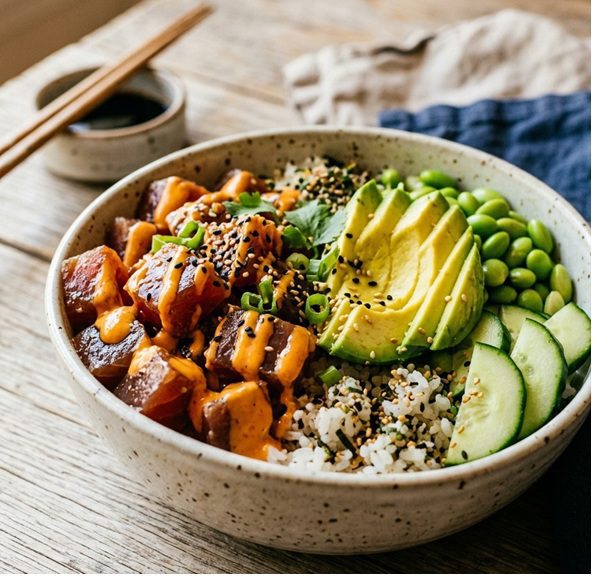
Salmon is best the day it’s made. If you have leftovers, reheat in a 300°F oven for 8 minutes rather than the microwave — low and slow prevents the fish from overcooking further. The glaze won’t re-caramelize but the salmon reheats well at low temperature. Cold leftover honey sriracha salmon flaked over rice with sliced cucumber and sesame seeds is also an excellent next-day lunch that requires no reheating.

Honey Sriracha Salmon
Ingredients
Meat & Protein
- 4 salmon fillets 6 oz each, skin-on, patted dry
Produce
- 1 lb green beans trimmed
- 3 garlic cloves minced
- 1 tsp fresh ginger grated
- 1 lime cut into wedges, for serving
- 2 green onion thinly sliced, for garnish
Pantry & Canned Goods
- 3 tbsp honey
- 2 tbsp sriracha adjust to heat preference
- 1.5 tbsp soy sauce low sodium
- 1 tbsp rice vinegar
- 2 tbsp olive oil divided — 1 tbsp for salmon, 1 tbsp for green beans
- 1 tbsp sesame seeds toasted, for garnish
Seasonings & Spices
- ½ tsp kosher salt divided
- ¼ tsp black pepper
Instructions
- Preheat the oven to 400°F. Line a large sheet pan with foil — the honey glaze will burn onto an unlined pan and is very difficult to clean.
- In a small bowl, whisk together the honey, sriracha, soy sauce, rice vinegar, minced garlic, and grated ginger until combined. Set aside — this is the glaze.
- Toss the trimmed green beans with 1 tbsp olive oil and ¼ tsp kosher salt. Spread in an even layer on one half of the prepared sheet pan. Roast for 8 minutes while you prep the salmon.
- Pat the salmon fillets completely dry with paper towels — moisture prevents the glaze from adhering and causes steaming instead of roasting. Season the flesh side with the remaining ¼ tsp kosher salt and black pepper. Brush or spoon 1 tbsp olive oil over the flesh side.
- Pull the pan from the oven. Push the green beans to the edges and place the salmon fillets skin-side down in the center of the pan. Spoon or brush half the glaze generously over the flesh side of each fillet, reserving the remaining glaze.
- Return to the oven and roast for 8 to 10 minutes, until the salmon is nearly cooked through — it should flake at the thickest point but still look slightly glossy in the center. Internal temperature should read 125°F to 130°F at this point.
- Switch the oven to broil on high. Spoon or brush the remaining glaze over the salmon fillets. Broil for 2 to 3 minutes, watching closely, until the glaze is caramelized, sticky, and slightly charred at the edges. The salmon is done when it flakes easily and reaches an internal temperature of 130°F to 135°F for medium or 145°F for well done.
- Remove from the oven. Garnish with sliced green onion and sesame seeds. Serve immediately with lime wedges for squeezing over the top.