Poke Bowl Recipe Using Store-Bought Sushi-Grade Fish
Your grocery store has been selling sushi-grade fish for years. You’ve walked past it a hundred times, glanced at it, and kept moving toward the salmon fillets you were already going to overcook. That ends tonight. We’re making an easy poke bowl recipe
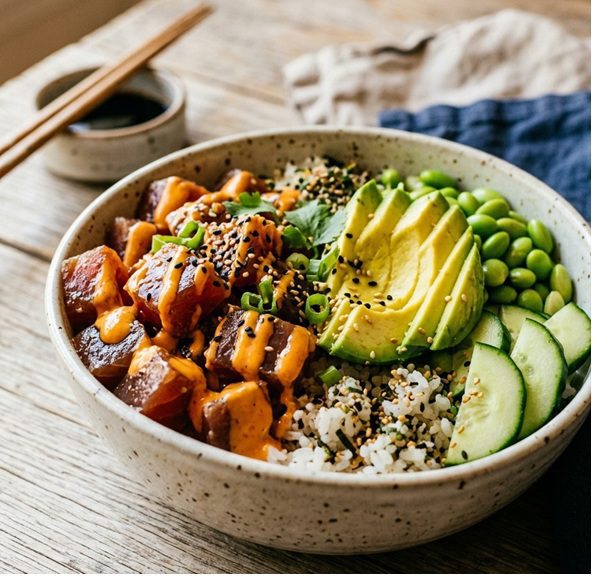
A poke bowl — pronounced poh-kay, Hawaiian for “to cut into pieces” — is raw marinated fish over rice with toppings. It’s what your $22 lunch spot charges a premium for and takes about ten minutes to make at home with ingredients that are already sitting in a refrigerated case twenty feet from the checkout lane. The fish is fresher because you picked it. The toppings are exactly what you want. And you didn’t have to wait in a line.
Your grocery store already has everything you need
The sushi-grade fish question is the one that stops most people. They assume they need a specialty fish market or a Japanese grocery store. They don’t. Kroger, Publix, Whole Foods, Costco, and most Asian grocery stores carry sushi-grade tuna and salmon in the seafood case — separate from the regular fish counter, usually vacuum-sealed or in a display case. If the label says “sashimi-grade,” that works too. Both terms mean the fish has been frozen to FDA-required temperatures to eliminate parasites and is safe to eat raw. If you’re unsure, ask the person behind the seafood counter. They’ll know.
Beyond the fish: a rice pouch from the pantry, an avocado, cucumber, edamame (frozen is fine, just thaw it), and the spicy mayo you’re going to make in thirty seconds from two ingredients you already have. That’s the whole bowl.
Why five minutes of marinating is enough
Every other poke bowl recipe online tells you to marinate the fish. What most of them don’t mention is that you can overdo it. Soy sauce, sesame oil, and rice vinegar are all acidic or enzymatic to varying degrees. Leave sushi-grade tuna or salmon in that marinade for more than fifteen minutes and you’ll notice the texture starting to change — the fish gets slightly firm and opaque on the outside, which is fine if you want that, but it’s not traditional poke. Five minutes is the sweet spot. The flavor gets in, the texture stays buttery and clean.
Toss the cubed fish gently. Don’t stir aggressively. Sushi-grade fish is delicate and you want cubes, not shredded fish.
The spicy mayo takes thirty seconds and makes the bowl
Two ingredients: mayonnaise and sriracha. Stir them together. That’s it. The ratio in this recipe is 2 tablespoons mayo to 1 tablespoon sriracha, which gives you a sauce with genuine heat that still has enough creaminess to pull the whole bowl together. If you want it hotter, add more sriracha. If you want it milder, back off. Make extra — you’ll use it on everything else in your refrigerator this week.
Drizzle it at the end, after everything is assembled. It’s a finishing sauce, not a base.
Build the bowl in order and it won’t get soggy
Rice goes in first, warm from the microwave pouch. Fish goes directly on the rice while the rice is still warm — the temperature contrast between cold marinated fish and warm rice is part of what makes a poke bowl taste like a poke bowl. Then the vegetables. Then the sauce. Then sesame seeds.
Don’t pre-assemble and refrigerate. The rice gets gummy, the avocado oxidizes, and the fish texture suffers. Build it, eat it.
Substitutions worth knowing
The fish is flexible. Sushi-grade salmon works exactly the same way as tuna — milder flavor, fattier texture, equally good. If you can’t find sushi-grade fish at all, you can cube cooked shrimp or even use the tuna from your tuna salad recipe in a pinch. Not traditional poke, but still a solid bowl.
The rice pouch is a legitimate shortcut. Ben’s Original, Seeds of Change, Minute Rice — any brand works. You can also use cauliflower rice if you’re tracking carbs.
Edamame can be swapped for canned corn, shredded carrots, or nothing. Cucumber can be replaced with thinly sliced radish. Avocado is non-negotiable. That’s not negotiable.
What to serve alongside it
This bowl is a full meal on its own. If you want something alongside it, miso soup from a packet takes two minutes and fits the flavor profile. A small side of pickled ginger from a jar works if you have it. That’s genuinely all it needs.
Storage
Poke bowls do not store well assembled. If you have leftover marinated fish, keep it separate in an airtight container and use it within 24 hours. The texture will change slightly overnight but it’s still good. Do not freeze sushi-grade fish after you’ve thawed it.
The math on this one
A standard poke bowl at a fast-casual restaurant runs $18–22 before delivery fees and tip. This version serves two for around $16 total in ingredients, and the fish quality is at least as good because you chose it yourself. That’s the whole argument.
Poke Bowl (Store-Bought Sushi Grade)
Ingredients
Meat & Protein
- 8 oz sushi-grade tuna or salmon cut into 3/4-inch cubes
Produce
- 1 avocado sliced
- 0.5 cucumber thinly sliced
- 2 green onion thinly sliced
- 0.5 cup edamame shelled, thawed if frozen
Pantry & Canned Goods
- 2 microwaveable rice pouch white or jasmine, 8.5 oz each — served warm or at room temperature
- 2 tbsp soy sauce low sodium
- 1 tsp sesame oil
- 1 tsp rice vinegar
- 2 tbsp mayonnaise Hellmanns or Dukes recommended
- 1 tbsp sriracha adjust to taste
Seasonings & Spices
- 1 tsp sesame seeds for garnish
- 0.25 tsp black pepper
Instructions
- Make the spicy mayo: stir together the mayonnaise and sriracha in a small bowl. Set aside.
- Marinate the fish: in a medium bowl, combine the cubed sushi-grade tuna or salmon with soy sauce, sesame oil, rice vinegar, and black pepper. Toss gently to coat. Let sit for 5 minutes while you prep the toppings.
- Heat the rice pouches according to package instructions — typically 90 seconds in the microwave. Divide between two bowls.
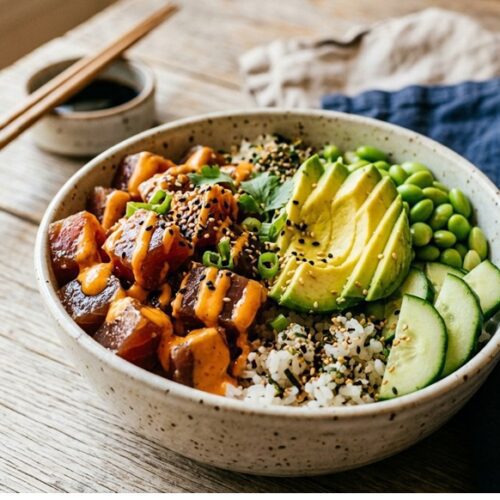
- Build the bowls: arrange the marinated fish over the rice. Lay the avocado slices alongside. Add cucumber, edamame, and green onion.
- Drizzle the spicy mayo over the top. Sprinkle with sesame seeds. Serve immediately.