Dump and Go Slow Cooker Butter Chicken
Slow cooker butter chicken has a dirty little secret: most versions aren’t really slow cooker recipes. They’re stovetop recipes that borrow the slow cooker for the middle part. I read through the top-ranking ones before writing this, and almost every one sends you back to the kitchen at some point. Sear the chicken first. Sauté the onions in a separate pan. Fish the chicken out so you can whisk in cream. Cook another 30 minutes to thicken. And if it’s still thin, mix up a cornstarch slurry. That’s not dump-and-go. That’s babysitting, with extra dishes.
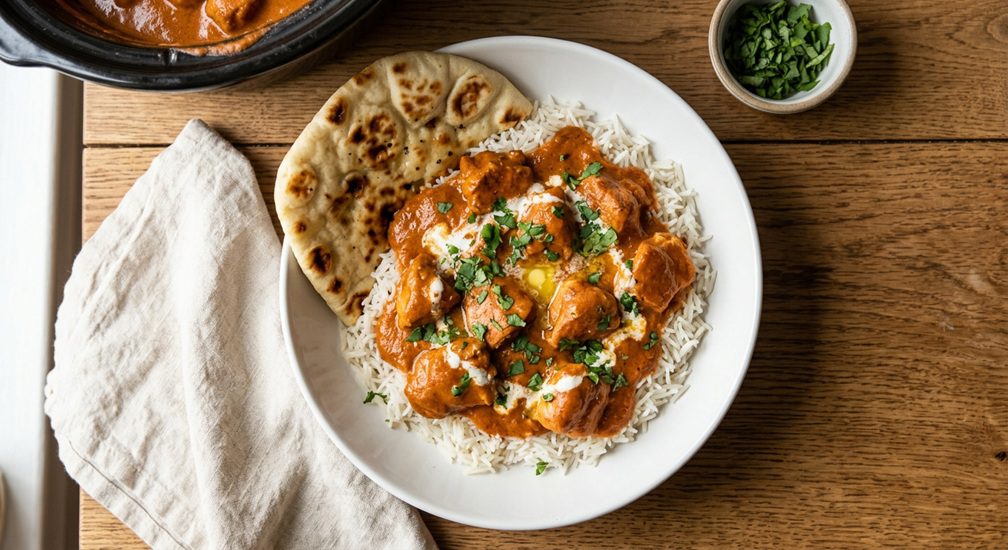
This version is 11 ingredients, 10 minutes of prep, and zero return trips. The chicken thighs get tossed in cornstarch and garam masala before they go into the crockpot. The tomato-butter sauce thickens itself over six hours. The only thing you do at dinnertime is pour in cream and stir. You get the rich, mildly spiced, creamy tomato curry you’d order from your favorite Indian takeout place, at roughly 35 grams of protein per serving, over basmati rice or with warm naan. And there’s no sauté pan in the sink.
Why the cornstarch goes on the chicken instead of into a slurry
Here’s why most slow cooker butter chicken comes out thin. Chicken releases a lot of liquid as it cooks, and a slow cooker lid traps every drop of it. Nothing evaporates. So the sauce that looked thick at 8 a.m. turns watery by 5 p.m., and the recipe tells you to fix it with a slurry and another half hour on high.
Coating the chicken in cornstarch puts the thickener exactly where the water comes from. As the thighs release their juices, those juices run straight through a starch coating and thicken gradually, all day, without you. It’s the same trick that runs our slow cooker beef stew (flour instead of cornstarch) and our slow cooker honey garlic chicken thighs, and it works just as well in a tomato sauce.
There’s one honest caveat. Cornstarch can lose some of its thickening power after hours in an acidic sauce, and tomatoes are acidic. That’s why this recipe also uses 3 tablespoons of tomato paste. Tomato paste is already concentrated, so it doesn’t break down, and it gives the sauce a thick, velvety base that doesn’t depend on the starch alone. Between the two, the sauce comes out spoon-coating thick every time.
To coat the chicken properly, toss the thighs in a dry bowl with the cornstarch, half the garam masala, and the salt until you can’t see any white patches. If your chicken is sitting in a lot of package liquid, pat it dry first so the cornstarch sticks to the meat instead of turning into paste in the bowl.
Leave the thighs whole (seriously)
Almost every other recipe has you cut the chicken into bite-sized pieces before it goes in. Over a 6-hour cook, that works against you. Small pieces have far more surface area, so they lose moisture faster and can go stringy and dry by the end of the day, even sitting in sauce.
Whole thighs protect their own interiors. They come out fork-tender and juicy, and at the end you just break them apart with two forks or tongs right in the pot. They fall into perfect rustic chunks with almost no effort. As a bonus, you skip cutting raw chicken, and nobody has ever complained about doing less of that.
Why thighs and not breasts? Thighs have more fat and connective tissue, and both hold up to a long cook. Chicken thighs are safe at 165°F, but they get noticeably more tender when they hit 175°F or higher, which a slow cooker gets them to easily. If you’d rather use chicken breasts, it works, but cut the cook time to about 4 hours on low and pull them at 165°F. Breast meat does not forgive a full 6-hour cook.
One jar of garam masala instead of six
A lot of butter chicken recipes read like a spice-cabinet inventory: garam masala, cumin, turmeric, smoked paprika, chili powder, coriander, sometimes fenugreek. If you already own all of those, great. Most people don’t, and buying six jars for one dinner is how a Tuesday recipe turns into a $40 grocery run.
Garam masala is already a blend. Depending on the brand, it’s built from cinnamon, cardamom, cloves, cumin, coriander, and black pepper, which covers most of that list in one jar. It’s the backbone of butter chicken’s warm, aromatic flavor, and it’s sold in the spice aisle of basically every grocery store now.
This recipe splits the garam masala between two places on purpose. Half goes into the tomato sauce, where it blooms over the long cook and flavors the whole pot. The other half goes into the cornstarch coating on the chicken, so the surface of every piece is seasoned too, not just the sauce around it. Brands vary in strength, so taste the finished sauce and add a pinch more if yours is on the mild side.
Don’t swap the fresh garlic and ginger for powders. They’re the two aromatics doing the heavy lifting here, and fresh grated ginger in particular gives butter chicken its bright, slightly peppery edge. A microplane makes quick work of both. If you want a shortcut, jarred ginger paste works fine.
You’ll notice there’s no onion. Plenty of recipes blend or sauté an onion into the sauce. Raw onion dropped straight into a slow cooker doesn’t get the sweet, browned flavor it would in a pan, so rather than make you sauté it, this recipe leaves it out and lets the tomato paste bring the sweetness and depth.
The cream goes in last, and that isn’t a return trip
The other recipes that add cream at the end usually follow it with “cook 30 more minutes to thicken.” That’s the return trip this recipe is built to avoid. Here the sauce is already thick when you lift the lid, so the cream is a 30-second stir, not another cooking step.
Why not add the cream at the start? Dairy held at a simmer for hours in an acidic tomato sauce can break, leaving you with a grainy, separated sauce and little slicks of fat on top. Added off the heat at the end, it melts into the tomato and butter and turns the whole pot that creamy, restaurant-style orange.
The butter, on the other hand, goes in at the beginning. Scatter it over the top in pieces and it slowly melts down through the sauce and the chicken as it cooks. It’s the reason this dish is called butter chicken, and it’s what gives the sauce its rich, rounded flavor.
If you don’t keep heavy cream around, full-fat canned coconut milk is a one-to-one swap. It’s slightly sweeter, with a mild coconut note that works well with the garam masala.
What to serve with butter chicken, and how to make it spicier
Basmati rice is the classic pairing. Its long, separate grains soak up the sauce without going mushy. Rinse it until the water runs mostly clear before you cook it and it’ll come out fluffy instead of gummy. Warm naan is the other must. Store-bought is completely fine: warm it in a dry skillet for 30 seconds a side, or wrap a stack in foil and heat it in a 350°F oven for 5 minutes.
Butter chicken is mild by design. It’s spiced, not hot, which makes it one of the most kid-friendly curries out there. If you want real heat, whisk ½ teaspoon of cayenne into the tomato sauce before the chicken goes in, or pass crushed red pepper flakes at the table so everyone can set their own level.
People often ask about the difference between butter chicken and chicken tikka masala. They’re close cousins, and restaurants don’t always draw a hard line between them. Generally, butter chicken (murgh makhani) is the milder, richer, more buttery of the two. Tikka masala usually starts with marinated, charred chicken pieces and a bolder, more tomato-forward sauce. If you like tikka masala, you’ll almost certainly like this.
Storing, freezing, and reheating butter chicken
Leftover butter chicken keeps up to 4 days in an airtight container in the fridge, and it honestly tastes better on day two once the spices settle in. Store rice separately so it doesn’t drink up all the sauce overnight.
To reheat, warm it in a saucepan over medium-low heat with a splash of water or chicken broth, stirring until heated through. In the microwave, heat individual portions for about 90 seconds, stirring halfway. The sauce will thicken in the fridge, so the splash of liquid helps loosen it back up.
Butter chicken freezes well for up to 3 months. For the best texture, freeze it before you add the cream, then stir the cream in as you reheat. If you’re freezing leftovers that already have cream in them, the sauce may separate slightly when it thaws. Whisk it as it warms and it’ll come back together.
If you like letting the slow cooker handle the thickening, the same coat-it-up-front trick powers our Slow Cooker Honey Garlic Chicken Thighs, and Slow Cooker Beef Stew does the same thing with flour.
Slow Cooker Butter Chicken
Ingredients
Meat & Protein
- 2.5 lb boneless skinless chicken thighs
Produce
- 5 garlic cloves minced
- 1 tbsp fresh ginger grated
- 0.25 cup fresh cilantro roughly chopped
Dairy
- 4 tbsp unsalted butter cut into pieces
- 0.75 cup heavy cream
Pantry & Canned Goods
- 28 oz crushed tomatoes one 28 oz can
- 3 tbsp tomato paste
- 2 tbsp cornstarch
Seasonings & Spices
- 2 tbsp garam masala divided
- 1.5 tsp kosher salt
Instructions
- In the slow cooker insert, whisk together the crushed tomatoes, tomato paste, garlic, ginger, and 1 tablespoon of the garam masala until smooth.
- In a large bowl, toss the chicken thighs with the cornstarch, the remaining 1 tablespoon garam masala, and the kosher salt until every piece is evenly coated with no dry white patches. Leave the thighs whole.
- Nestle the coated thighs into the sauce in as even a layer as possible and spoon some sauce over the top. Scatter the butter pieces over everything. Do not stir.
- Cover and cook on LOW for 6 hours or HIGH for 3 hours without lifting the lid, until the chicken is fork-tender and registers at least 175°F.
- Turn off the slow cooker. Use two forks or tongs to break the thighs into bite-sized chunks right in the pot. They will fall apart with almost no effort.
- Pour in the heavy cream and stir until the sauce turns an even, creamy orange. Let it sit 2 minutes, then taste and add more salt if needed.
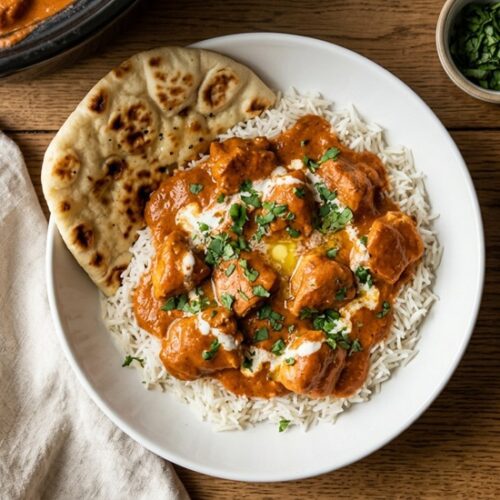
- Serve over basmati rice or with warm naan, topped with fresh cilantro.