Smash Burgers: The Fifteen-Minute Burger That Beats Every Drive-Through
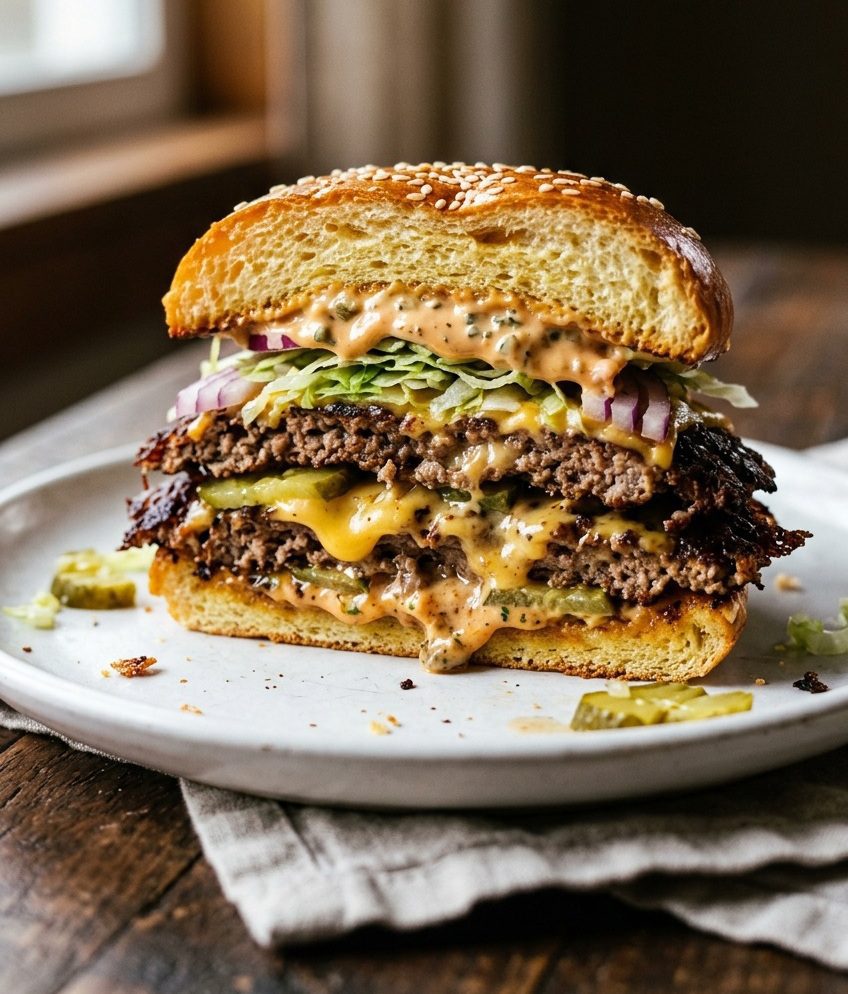
The smash burger recipe is not complicated. It’s a two-ounce ball of cold 80/20 ground beef pressed flat on a screaming hot cast iron pan, seasoned, flipped once, and finished with a slice of American cheese that melts in the thirty seconds it takes the second side to cook. Start to finish, you’re looking at fifteen minutes. The result is a burger with a crust on it that you cannot replicate any other way — caramelized, lacy edges, deeply browned from edge to edge, with a center that stays juicy because it cooked fast instead of slowly drying out.
Every fast-casual smash burger chain charges $14 for this. You’re making four for the price of a pound of ground beef and a bag of brioche buns.
Why the smash works
Regular burger patties — the thick ones, formed into rounds — cook from the outside in. The exterior has to reach temperature before heat can travel inward, which means the outer layer is often overdone by the time the center catches up. Smash burgers flip that logic entirely. The patty is thin enough that the whole thing is essentially one surface. There’s no center to worry about. The entire burger is in contact with the pan, the Maillard reaction fires across the whole patty at once, and you’re done in ninety seconds.
The crust isn’t just texture. The browned bits are where the flavor lives. A smash burger with good crust has more beef flavor than a half-pound conventional patty that cooked slowly and gently. It’s counterintuitive but it’s accurate.
The two things that actually matter
The beef must be cold. This is not optional. Cold fat stays in the patty as it cooks. Warm fat renders out immediately, before the crust has a chance to form, and you end up with a dry, gray patty sitting in a puddle of grease. Pull the ground beef out of the fridge when you turn the pan on — not five minutes earlier. The balls go from cold to pan with no time in between.
The pan must be smoking hot. Three to four minutes on high heat, no oil. The fat in 80/20 beef handles lubrication on its own, and adding oil just lowers the pan temperature. When you place the beef ball in the pan, you should hear an immediate aggressive sear. If you don’t, the pan wasn’t ready. Let it go longer next time.
That’s it. Two rules. Everything else — the sauce, the cheese, the bun — is assembly.
American cheese is the right call
Every smash burger recipe on the internet eventually gets a comment from someone asking if they can use cheddar. You can. It won’t melt properly in the thirty-five seconds you have before the patty overcooks. American cheese is specifically engineered to melt fast and evenly, which is exactly what a smash burger needs. This is not a compromise — it’s the correct tool for the job. Sharp cheddar is excellent on a thick, slowly cooked burger where you have time. It doesn’t work here.
Put the cheese on immediately after the flip. The residual heat from the pan and the patty will do the rest.
The special sauce takes two minutes and is worth it
Mayo, ketchup, finely chopped pickles, Dijon. That’s the whole recipe. Stir it together before you start cooking and put it in the fridge. It tastes like a better, sharper version of the sauce at every burger chain you’ve been to, and it takes longer to read about than to make. Spread it on both halves of the toasted bun.
Toast the buns in butter in a separate pan while the beef cooks. The toasted bun holds up to the sauce without getting soggy. An untoasted brioche bun will be a structural disaster by the second bite.
Double stack, always
One patty per burger is fine. Two patties per burger is the point of a smash burger. Stack them immediately while the cheese is still molten on the top patty. The cheese from the top patty melts down between the two patties and acts as a second sauce layer. This is not excess — it’s the architecture of the thing.
One pound of 80/20 beef, divided into 8 two-ounce balls, makes 4 double-patty burgers. That’s dinner for the household with maybe one left over, which someone will eat cold straight from the fridge and not regret.
Substitutions
The brioche bun can be swapped for a potato roll, a Martin’s bun, or a plain sesame bun. All work. Pretzel buns are too dense and throw off the ratio.
The onions in this recipe are raw, added directly to the patty before the flip so they cook into the crust. If you want caramelized onions, make them ahead — they take 20 to 25 minutes and cannot be rushed. Worth it, but a separate project.
Pepper jack melts acceptably fast if you want heat. Swiss is too thick and too slow. Provolone works in a pinch.
Storage
Smash burgers do not store well. They’re designed to be eaten immediately while the crust is still crisp and the cheese is molten. Leftover patties reheated in a pan the next day are fine for a quick lunch but the crust will not come back. Make what you’re going to eat.
If you have leftover sauce, it keeps in the fridge for a week and works on eggs, chicken sandwiches, and anything that benefits from a tangy, creamy condiment.
The math
A smash burger combo at a fast-casual restaurant runs $13 to $16 before tax. Four homemade double-patty smash burgers cost around $10 in ingredients total. The beef is better because you picked it. The sauce is better because you made it. The bun is toasted in butter, which no drive-through is doing for you.
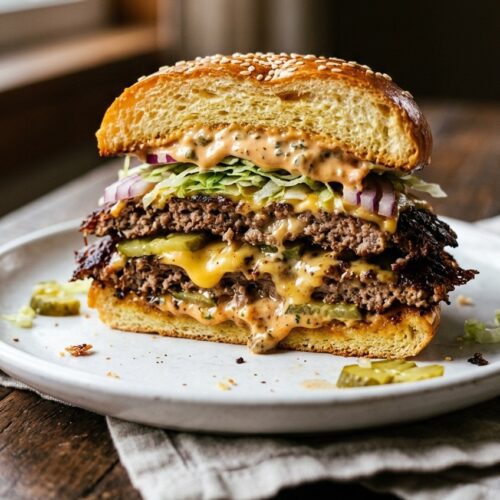
Smash Burgers
Ingredients
Meat & Protein
- 1 lb ground beef 80/20, cold from the fridge
Produce
- 0.5 white onion very thinly sliced
Dairy
- 4 American cheese slices
- 2 tbsp unsalted butter for toasting buns
Pantry & Canned Goods
- 4 brioche burger buns split
- 3 tbsp mayonnaise Hellmanns or Dukes recommended
- 1 tbsp ketchup
- 1 tbsp dill pickle slices finely chopped, plus more whole slices for topping
- 1 tsp Dijon mustard
Seasonings & Spices
- 0.75 tsp kosher salt
- 0.5 tsp black pepper freshly cracked
Instructions
- Make the special sauce: stir together the mayonnaise, ketchup, chopped pickles, and Dijon mustard in a small bowl. Set aside in the fridge.
- Divide the cold ground beef into 8 equal portions — about 2 oz each. Roll loosely into balls. Do not overwork the meat. Keep them in the fridge until the pan is ready.
- Heat a cast iron skillet or heavy-bottomed pan over high heat for 3 to 4 minutes until smoking. Do not add oil — the fat in the beef handles it.
- Toast the buns: melt butter in a separate skillet over medium heat and toast the buns cut-side down until golden, about 1 to 2 minutes. Set aside.
- Working in batches of 2, place beef balls in the hot pan and immediately smash flat with a heavy spatula or burger press. Press firmly and hold for 10 seconds. Season the tops generously with kosher salt and black pepper. Add a few slices of onion on top of each patty.
- Cook undisturbed for 60 to 90 seconds until the edges are deeply browned and lacy. Scrape under the patty with your spatula — get all the crust — and flip. Immediately place a slice of American cheese on top. Cook for 30 to 45 seconds more.
- Stack two patties per burger. Spread special sauce on both bun halves. Add pickle slices. Serve immediately.